How Is AI Used in Marketing Agency Reporting?
See how ai used in marketing agency reporting turns raw data into clearer reports, faster QA and better handoffs without adding headcount.

Reporting gets expensive when every client needs a different story, every platform has its own export and every account manager rewrites the same commentary on Thursday afternoon. The phrase “AI used in marketing” is too broad to be useful until you tie it to that reporting grind: data pulls, anomaly checks, commentary, QA and follow-up.
For an agency owner or delivery lead, the goal is not a prettier dashboard. The goal is a reporting process that burns fewer senior hours, catches issues earlier and gives clients clearer decisions without turning your team into part-time internal IT.
Where AI used in marketing actually helps reporting
In agency reporting, the useful work happens around the report, not only inside the slide deck or dashboard. The system can gather the right inputs, compare them against client goals, flag changes worth reviewing, draft plain-English commentary and create follow-up tasks for the team.
That matters because most reporting pain is coordination pain. A media buyer knows why spend moved. A strategist knows what the client cares about. An account manager knows which explanation will land well. The problem is that those details often live in Slack threads, notes, spreadsheets and someone’s head.
Used this way, AI used in marketing is less about asking a chatbot to write a paragraph and more about connecting messy inputs into a repeatable reporting lane. It should shorten the path from raw data to a reviewed client narrative.
If your team still has to copy numbers, hunt for context and ask three people what happened, the reporting process is not ready for more software. It needs a cleaner operating rhythm first.
Start with the reporting job, not the tool
Before adding anything new, define what the report is supposed to do. Many agency reports are too broad because they are built from available metrics instead of client decisions. The client gets pages of charts, then the call becomes a guided tour through data they may not need.
A good report answers three questions: what changed, why it matters and what happens next. That applies across paid media, SEO, creative, PR, social, ecommerce and local marketing. The metrics change by service line, but the delivery job is similar.
The practical version of AI used in marketing starts when you map the reporting job into repeatable steps. Which data sources are always checked? Which metrics are watched by account type? Which exceptions require senior review? Which explanations are safe to draft and which must be written by the channel owner?
If you skip that mapping, your team usually gets a new place to paste old work. If you do the mapping first, the system has boundaries and the team knows when to trust it.
What the reporting system should do before a human writes a word
The highest-margin reporting work is not the final commentary. It is the prep that happens before the first sentence gets written. That prep should be standardized enough that a system can handle it the same way every week or month.
In reporting, AI used in marketing can prepare a clean working file for the person who owns the client narrative. It can pull the latest exports or connected data, summarize movement, compare performance against agreed goals and surface missing inputs before review begins.
| Reporting layer | What the system prepares | What the human decides |
|---|---|---|
| Data collection | Latest platform data, CRM fields, report notes and client goals | Whether the source is complete and current |
| Normalization | Consistent campaign names, date ranges, labels and account groupings | Whether the grouping reflects how the client buys or operates |
| Exception scan | Spend shifts, pacing changes, traffic drops, conversion changes and missing fields | Whether the change is material enough to discuss |
| Commentary draft | A first pass at what changed and what may need attention | The final interpretation and client-safe wording |
| Follow-up | Tasks, owners and open questions from the report | What actually gets assigned and when |
The table is simple on purpose. If the system cannot explain where a number came from or why something was flagged, the team will stop trusting it. Agency reporting needs clarity more than cleverness.
Where the hours usually disappear
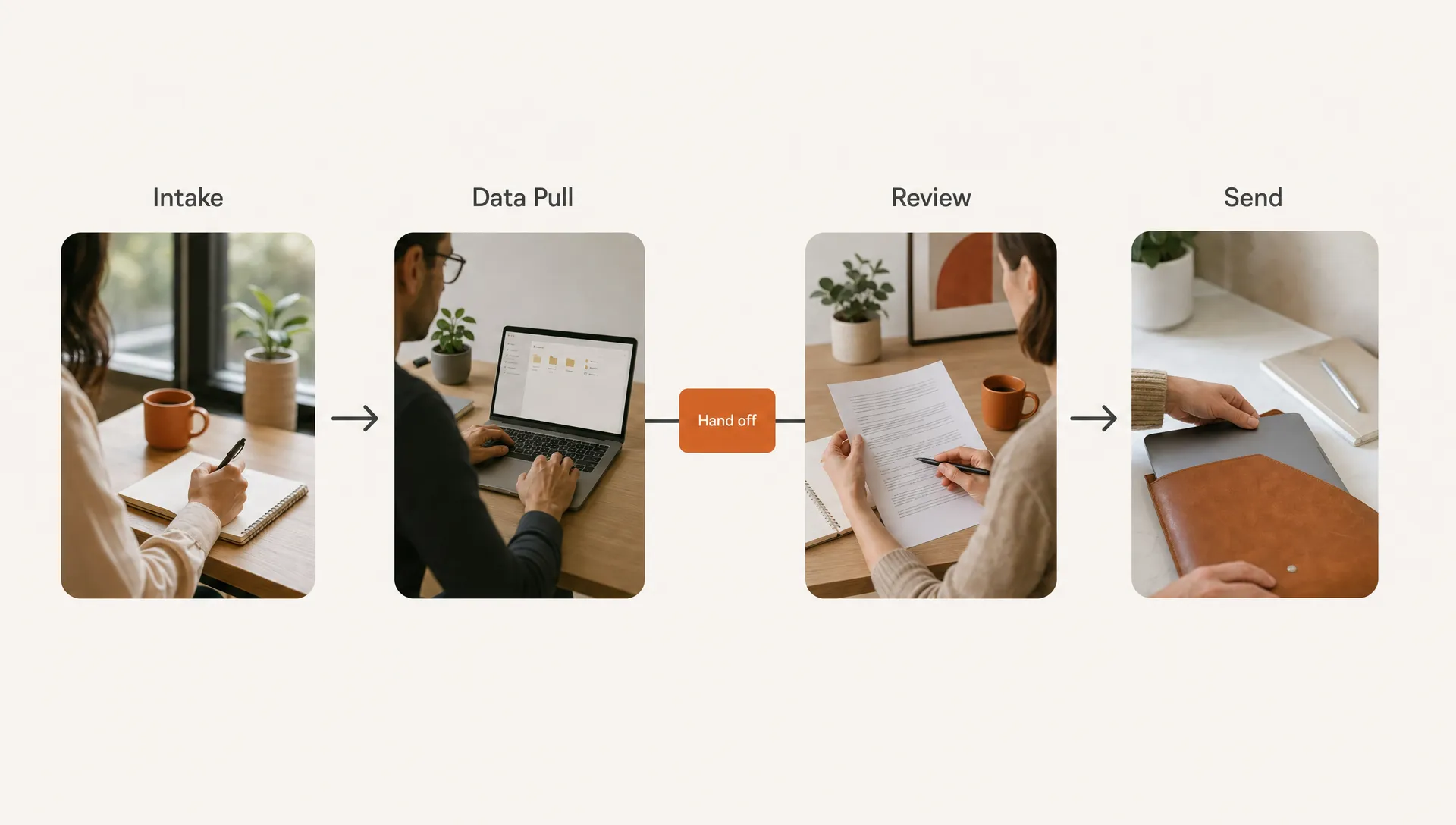
Most agencies do not lose reporting hours in one obvious place. The waste is spread across tiny handoffs. One person exports data. Another cleans it. Someone asks whether the date range is right. A channel lead adds a note. An account manager rewrites it for the client. Then leadership checks tone because the account is sensitive.
That chain creates margin drag because the same people who should be doing client work are babysitting the reporting process. If your reports are late, inconsistent or dependent on one senior person, the bottleneck is probably operational rather than analytical. This is why I like starting with the mechanics covered in this piece on fixing marketing agency reporting bottlenecks before expecting software to carry the process.
The best use of AI used in marketing reporting is to remove the low-judgment waiting, not the judgment itself. A system can assemble the packet. A person still needs to decide what the client should hear, what should be escalated and what should wait.
The report should separate facts from interpretation
A common reporting failure is blending data, opinion and next steps into one long paragraph. That makes review harder. It also makes the client call longer because nobody can tell which points are facts and which are recommendations.
A cleaner structure separates the report into layers. The facts say what happened. The interpretation says why the team thinks it happened. The decision section says what the agency recommends doing next. This is where reporting becomes a delivery system instead of a status artifact.
When AI used in marketing is applied well, it can draft the factual layer from structured inputs and propose interpretation for review. It should not silently turn guesses into conclusions. For example, “traffic declined after the landing page change” is different from “the landing page change caused traffic to decline.” The first can be drafted from a timeline. The second needs evidence.
This distinction protects trust. It also protects your team from rewriting vague commentary at the last minute.
Context is the part most tools miss
Reporting is not just a math exercise. A client’s market, offer, service model and internal constraints change what the numbers mean. A local service organization, a DTC brand, a franchise group and a B2B demand-gen account should not receive the same style of commentary just because the chart shape looks similar.
For example, a community service site such as Ons Plekske’s day-activity program carries context that a platform export will never know on its own: who the service is for, what kinds of activities are offered, how trust is built and what a meaningful inquiry might look like. If an agency served an organization like that, reporting would need to reflect the audience and service journey, not only clicks and form fills.
This is where AI used in marketing needs a controlled context pack. That pack can include the client’s positioning, service lines, report goals, approved language, target audience notes, exclusions and past strategic decisions. Without it, the system guesses from generic patterns. With it, the first draft becomes easier for the account lead to review.
The context pack should be maintained like an operational asset, not a random prompt saved in someone’s notes app.
Human review is where margin is protected
A reporting system should reduce first-draft and assembly time, but it should increase the quality of human review. That sounds counterintuitive until you look at what senior people are usually asked to review.
Too often, a senior strategist is checking whether the chart is current, whether a screenshot is missing, whether a number matches another tab and whether the commentary says anything useful. That is not a good use of senior time. The system should clear the basic checks first so the reviewer can focus on judgment.
A healthy review lane asks better questions. Is the recommendation commercially sensible? Does the explanation match what the channel owner saw? Is there a client relationship issue behind the metric? Are we accidentally creating scope creep by suggesting work that is not inside the retainer?
This is also where agency leaders need clear rules. Some reporting notes can be drafted and sent after light review. Sensitive commentary, budget changes, performance misses, hiring implications and client-facing commitments need a human owner. If you want a deeper breakdown by workflow, this article on where AI-based marketing still needs human review maps the review points clearly.
A practical reporting workflow for agencies
The cleanest reporting workflow is usually boring, which is good. Boring is repeatable. Repeatable is easier to maintain when the team is busy.
Start by choosing one report type, not every report in the agency. Monthly client reporting is often a strong candidate because it has a clear deadline, recurring inputs and a direct effect on client calls. If your monthly report is supposed to reduce meeting time, the structure matters as much as the data. The ideas in this article about how a marketing monthly report should cut status-meeting time pair well with this approach.
A workable version of AI used in marketing agency reporting can follow this flow:
- Intake the client’s goals, scope, approved metrics and current account notes.
- Pull or receive the data in a consistent format.
- Flag missing fields, odd changes and items that need channel-owner context.
- Draft facts, possible interpretation and open questions in separate sections.
- Route the report to the right reviewer before the account manager sees it.
- Turn approved next steps into tasks with owners, due dates and client-call notes.
Do not automate around a broken naming system, unclear client goals or messy ownership. Fix those first. The reporting system can only repeat the logic you give it.
What to watch after the system goes live
Once a reporting workflow is running, do not judge it by whether the first draft sounds impressive. Judge it by whether the team trusts it enough to use it under deadline pressure.
Look for practical signals. Are account managers spending less time chasing inputs? Are channel owners answering fewer repeat questions? Are senior reviewers focused on interpretation instead of formatting? Are reports going out with fewer last-minute corrections? Are client calls shorter or more decision-focused?
This is where AI used in marketing either becomes part of delivery or turns into shelfware. If the system adds a new review burden, the team will route around it. If it removes low-value steps and makes handoffs cleaner, it will stick.
The maintenance layer matters too. Client goals change. Platforms change. Service packages change. A reporting system that worked three months ago can drift if nobody owns updates to prompts, fields, rules and review paths.
FAQ
How is AI used in marketing agency reporting? It is used to gather reporting inputs, clean recurring data, flag changes, draft first-pass commentary, prepare reviewer questions and turn approved next steps into tasks. The agency still needs human judgment for interpretation, client tone and recommendations.
Should an agency let a system write the whole client report? Usually no. Let it prepare the factual layer, identify patterns and draft sections for review. The final narrative should be owned by someone who understands the client, the account history and the commercial context.
What reporting work should stay human? Strategy calls, sensitive explanations, budget recommendations, scope changes, relationship issues and final approvals should stay human-owned. The system should make those decisions easier to review, not bury them inside generic commentary.
What is the easiest place to start? Pick one repeatable report with clear inputs and a painful deadline. Map the current handoffs, standardize the data and commentary structure, then automate the prep and draft stages before touching final approval.
What to do next this week
If reporting is eating margin in your agency, do not start by shopping for a bigger dashboard. Pull one recent report and mark every handoff: who gathered data, who cleaned it, who explained it, who reviewed it, who rewrote it and who created the follow-up tasks. That map will show where the real cost sits.
Then choose one narrow reporting lane and write the rules your team already follows but has never documented. What data matters? What gets flagged? Who reviews what? Which client phrases are approved? Which recommendations require a senior person? That document is the beginning of a reporting system your team can actually use.
If you want outside help, Archer Scaling AI installs and runs AI ops systems for marketing agencies, including reporting workflows that fit the way delivery already works. If you want to talk through where reporting is burning hours in your agency, book a free 30-minute intro call. It is a conversation about your operations, not a sales call.