How to Lift Up Marketing Results With Better Ops
Lift up marketing results with better ops. Learn how agencies cut rework, speed delivery, improve reporting, and scale without extra hiring.
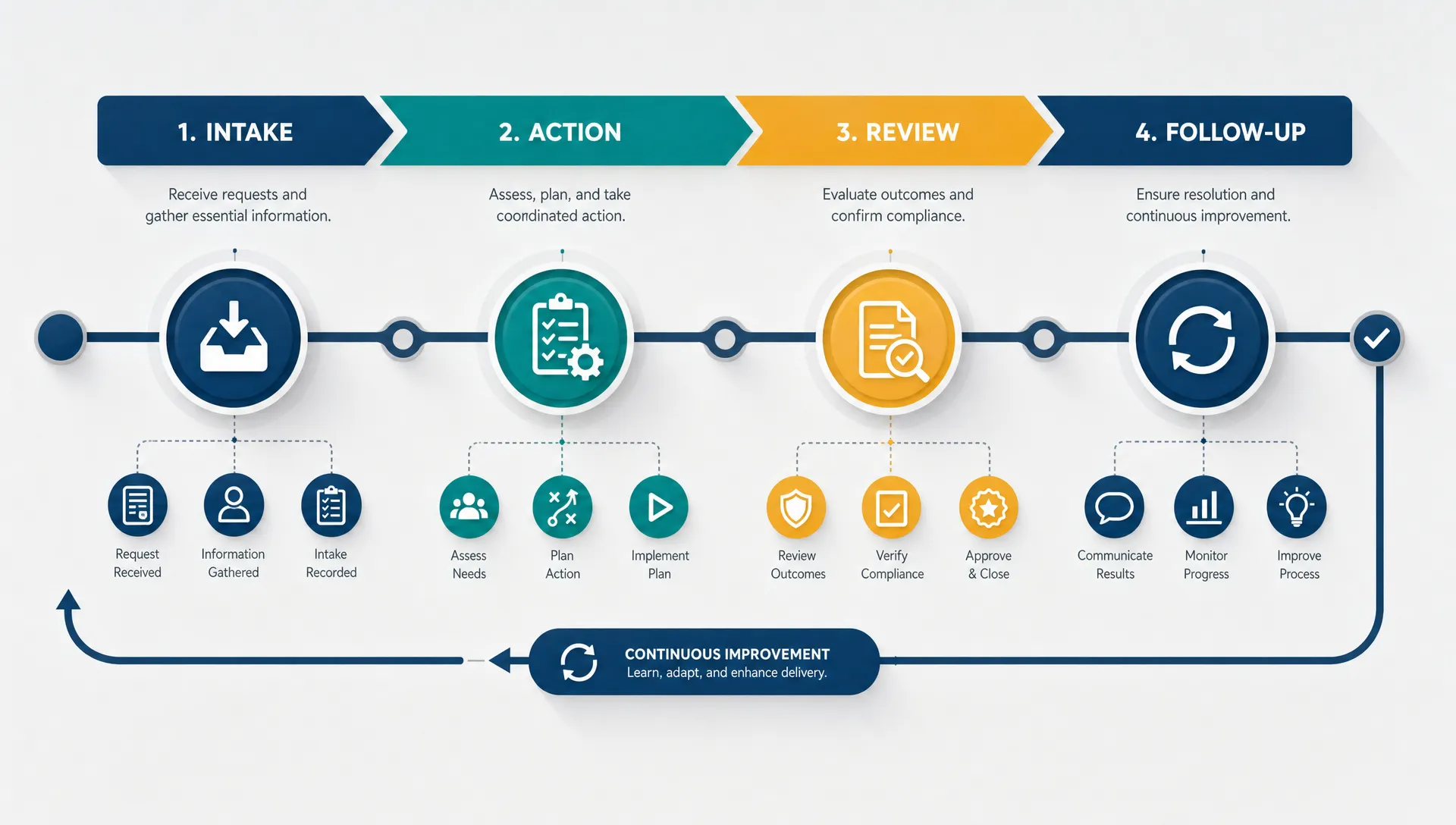
Most agencies try to improve marketing performance by adding more: more campaigns, more content, more channels, more meetings, more tools. Sometimes that helps. But when delivery operations are messy, every additional tactic creates more drag than lift.
To lift up marketing results in a sustainable way, agencies need to look underneath the campaign calendar. Results improve when the work behind the work becomes faster, clearer, and more consistent. That means better handoffs, cleaner inputs, sharper reporting, reusable assets, and automation that supports the team instead of creating another dashboard to babysit.
Better ops will not turn a weak strategy into a strong one. It will, however, help a good strategy survive contact with real client delivery.
What better ops actually means in a marketing agency
Marketing operations is not just project management. It is the system that turns strategy into repeatable client outcomes.
For a B2B marketing agency, better ops includes the way sales context moves into onboarding, how research is collected, how creative work is briefed, how approvals happen, how reports are assembled, how insights become next actions, and how recurring tasks are documented. It is the connective tissue between account management, strategy, creative, media, analytics, and leadership.
If that connective tissue is weak, teams compensate with more Slack messages, more status calls, more manual checking, and more heroic effort from senior people. That might work for a few accounts. It breaks as soon as the agency tries to scale.
This is why an AI ops layer matters. It is not about replacing marketers with AI. It is about embedding automation, structured workflows, and human review into the recurring work that already happens every week. For a deeper breakdown of that concept, Archer Scaling AI has written about why marketing departments need an AI ops layer to connect tools, workflows, data, and review into one operating system.
The hidden ops leaks that suppress marketing results
When performance is flat, the obvious suspects are usually the offer, targeting, creative, budget, or channel mix. Those can absolutely be the issue. But in agencies, operational leaks often distort the work before it reaches the market.
Ambiguous inputs create weak outputs
A vague brief leads to generic creative. Missing CRM context leads to irrelevant messaging. Incomplete onboarding leads to strategy built on assumptions. When the inputs are unclear, the team spends billable time interpreting, chasing, and rebuilding instead of producing better work.
Better ops fixes this by defining what a complete input looks like. That might include required onboarding fields, sales call summaries, ICP notes, funnel data, competitor context, approval stakeholders, and client-specific constraints. The point is not to collect everything. The point is to collect the minimum information needed to make good decisions without repeated backtracking.
Clients buy clarity as much as execution. The same pattern appears in other complex advisory fields: a company trying to reduce energy use may need independent energy advice for practical next steps because subsidies, regulations, grid constraints, and technical options are hard to translate alone. Marketing ops plays a similar role inside an agency. It turns scattered expertise into a visible sequence of decisions, owners, and next actions.
Slow handoffs reduce learning speed
Marketing improves through cycles: launch, observe, learn, adjust. If handoffs are slow, learning slows down too.
A strategist waits for performance data. A copywriter waits for positioning notes. A designer waits for final messaging. An account manager waits for reporting commentary. A client waits for the next recommendation. None of these delays feel dramatic in isolation, but together they stretch a two-day improvement loop into a two-week improvement loop.
Strong ops shortens the distance between signal and action. That is where marketing results start to compound.
Custom delivery quietly destroys margin
Agencies often sell expertise, then deliver it as if every account requires a completely new operating model. Some customization is necessary, especially in B2B where buying committees, sales cycles, and positioning vary. But when every report, brief, research process, and approval path is rebuilt from scratch, the agency pays a margin tax on every client.
The fix is not rigid standardization. It is modularity. Build standard components that can be adapted without reinventing the workflow each time.
Reporting happens too late to shape the work
Many agencies treat reporting as a monthly deliverable rather than a weekly operating tool. By the time the report is polished, the opportunity to act on the insight may already be gone.
Good reporting ops separates data collection from interpretation. Dashboards and templates can handle recurring data pulls, formatting, and QA checks. Humans should spend more time explaining what changed, why it matters, and what to do next. If reporting is a recurring bottleneck in your agency, the process in this guide to fixing marketing agency reporting bottlenecks is a useful companion to this article.
Where better ops has the fastest impact
The best operational improvements are usually not glamorous. They remove repeated friction from high-frequency workflows. That is why the first wins often come from onboarding, research, reporting, routing, and content production support rather than from flashy AI creative tools.
| Workflow area | Common symptom | Better ops move | Result to watch |
|---|---|---|---|
| Client onboarding | Strategy starts with missing context | Standard intake, call summaries, required asset checklist | Faster time to first useful deliverable |
| Research | Teams repeat the same manual searches | Reusable research templates and AI-assisted synthesis | More consistent briefs and fewer blank-page delays |
| Content and creative | Rework happens late in the process | Clear briefs, approval rules, version control | Lower revision volume and shorter cycle time |
| Reporting | Analysts spend hours formatting slides | Automated data pulls, QA checks, commentary prompts | More time spent on insight and next actions |
| Lead follow-up | Hot leads wait for manual routing | Defined routing logic and follow-up triggers | Faster response time and fewer missed opportunities |
| SOPs and hiring support | Knowledge lives in senior people’s heads | Documented workflows and role-based instructions | Easier delegation and less founder dependency |
None of these improvements require the agency to change its positioning or add a new service line. They make the existing service model easier to deliver well.
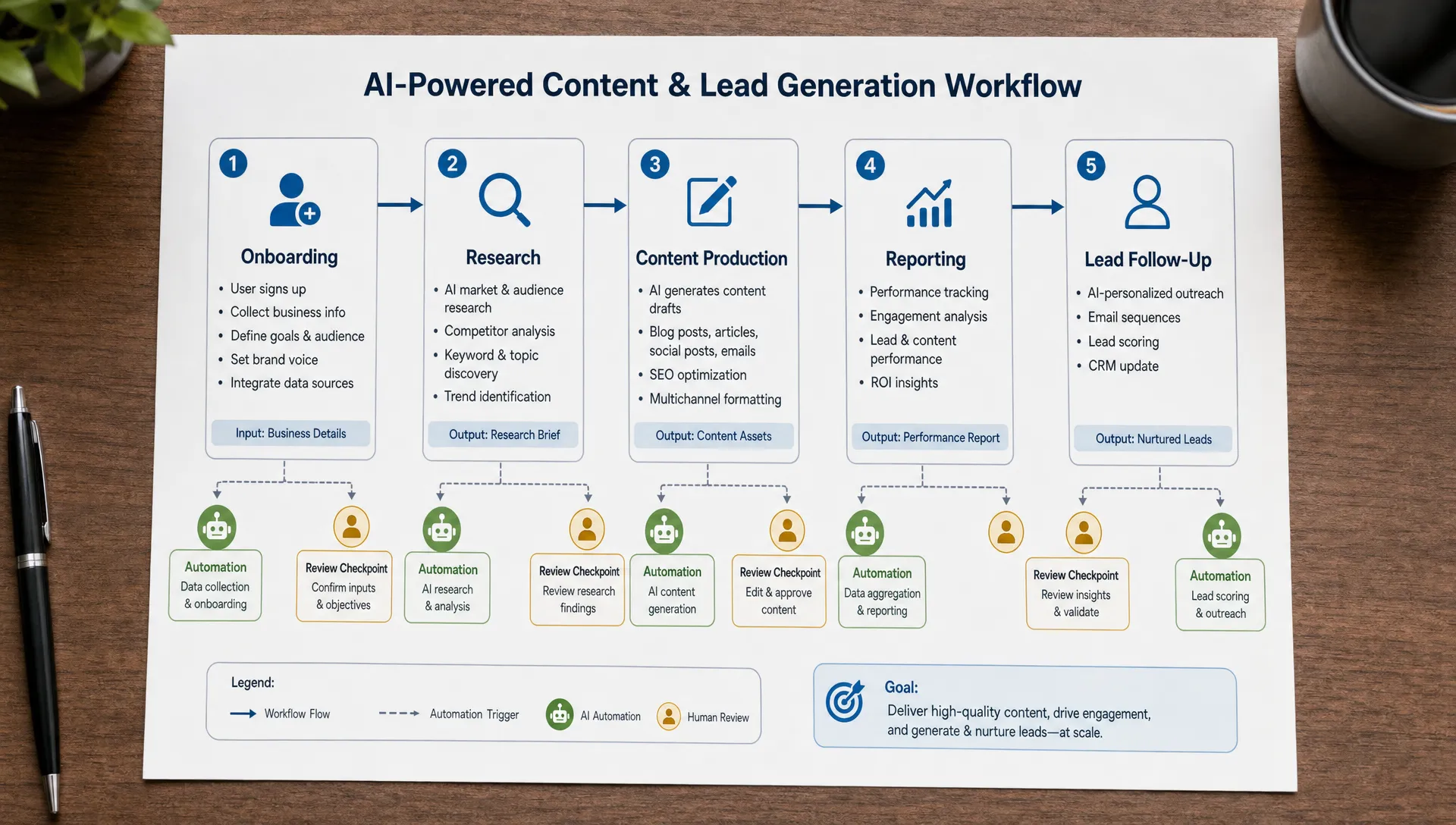
A practical process to lift up marketing results with ops
The common mistake is to start with tools. The better approach is to start with the work. Once the workflow is clear, choosing automation becomes much easier.
- Map the delivery path: Follow one client journey from signed agreement to recurring reporting. Write down each handoff, decision, approval, tool, and recurring deliverable. The goal is to see the work as a system, not as isolated tasks.
- Find the margin leaks: Look for delays, duplicate work, rework, unclear ownership, manual formatting, missing information, and tasks that require senior attention even though they follow a predictable pattern.
- Choose one repeatable workflow: Start where repetition is high and strategic risk is low. Client onboarding, reporting preparation, CRM hygiene, research collection, and lead routing are often better starting points than final strategy or brand positioning.
- Define the standard before automating: Automation amplifies whatever process exists. If the current process is unclear, automation will make confusion faster. Set required inputs, decision rules, naming conventions, QA checks, and escalation paths first.
- Add AI where it reduces waiting: Use AI to summarize, structure, draft, classify, compare, route, and check. Keep humans responsible for judgment, strategic recommendations, client-sensitive messaging, and final approvals.
- Review the system weekly: Treat ops as a living system. Ask what got stuck, what had to be redone, which prompts or templates failed, and which handoffs still depended on memory instead of process.
This process works because it connects operational improvement to business results. You are not automating for novelty. You are removing the friction that slows learning, weakens output quality, and eats margin.
What AI should and should not do in agency ops
AI is most useful when it sits inside a defined operating system. Without that system, it becomes another open-ended tool that each person uses differently.
A strong AI ops setup can help with first-pass research summaries, turning call notes into structured briefs, preparing reporting commentary drafts, checking whether onboarding information is complete, routing leads based on rules, generating SOP drafts from actual workflows, and creating repeatable content production support.
But AI should not own the agency’s judgment. It should not decide positioning, make unsupported performance claims, approve final client strategy, or replace the relationship context that account teams build over time.
Think of AI as operational leverage. It should reduce the amount of manual coordination required to do good work. It should not remove accountability from the people responsible for outcomes.
The scorecard: how to know better ops is working
If better ops is working, the signs show up in both delivery performance and financial performance. The agency should feel calmer, but it should also become measurably more efficient.
| Metric | What it reveals | Why it matters |
|---|---|---|
| Time to first deliverable | How quickly a new client becomes operational | Faster starts reduce client anxiety and internal drag |
| Revision rate | How often work comes back due to unclear inputs | Lower rework protects margin and morale |
| On-time reporting rate | Whether insights are delivered reliably | Consistent reporting builds trust and improves decisions |
| Senior review load | How much routine work depends on senior people | Lower dependency frees experts for higher-value strategy |
| Lead response time | How quickly demand is acted on | Faster follow-up can improve pipeline conversion |
| Gross margin by account | Whether delivery effort matches account value | Margin reveals whether the service model is scalable |
The most important metric is often learning velocity. Can the team turn market feedback into better recommendations faster than before? If yes, operations are not just making the agency more efficient. They are improving the quality of the marketing itself.
When better ops beats another hire
Hiring is sometimes the right move. If the agency lacks a capability, such as media buying expertise, senior strategy, analytics depth, or design capacity, a new hire may be necessary.
But many agencies hire to cover operational debt. They add a coordinator because handoffs are unclear. They add an account manager because reporting takes too long. They add a strategist because onboarding fails to capture sales context. They add freelancers because creative workflows create avoidable rework.
In those cases, a new person enters the same broken system and quickly becomes overloaded too.
Before adding headcount, ask whether the constraint is capacity or coordination. If the same task is repeated across clients, if senior people are answering the same questions every week, or if delivery quality depends on tribal knowledge, ops should come first. Archer Scaling AI expands on this idea in its guide to scaling marketing without adding headcount.
Better ops does not mean never hiring. It means hiring into a cleaner system, where new people can create leverage instead of absorbing chaos.
The real goal: make good work easier to repeat
Marketing teams do not struggle because they lack talent. Most struggle because the operating system around that talent is too loose.
The best agencies protect their thinkers from avoidable admin. They protect clients from inconsistent delivery. They protect margins from custom work that should have been standardized. They protect growth by making the next account easier to serve than the last one.
That is how better ops lifts marketing results. It makes strong execution less dependent on heroic effort and more dependent on a system that improves every cycle.
Frequently Asked Questions
What does it mean to lift up marketing results with better ops? It means improving outcomes by fixing the operational systems behind marketing delivery, such as onboarding, handoffs, reporting, research, approvals, and follow-up. Better ops helps teams execute faster, reduce rework, and learn from data more consistently.
Is marketing ops only useful for large agencies? No. Smaller agencies often benefit sooner because operational drag is more visible. When founders or senior strategists are still involved in routine coordination, better ops can free them to focus on strategy, client relationships, and growth.
Should agencies automate content creation first? Usually not. Content generation is visible, but the biggest margin gains often come from automating delivery operations first. Research intake, briefs, reporting preparation, CRM updates, lead routing, and onboarding tasks are often safer and more repeatable starting points.
How do I know if my agency needs AI ops instead of more staff? If your team is busy because of repeated handoffs, manual formatting, missing inputs, reporting delays, or recurring admin, AI ops may solve the root problem. If the issue is a missing skill or a true capacity gap after workflows are clean, hiring may be the better answer.
Ready to find the ops leaks holding back your agency?
Archer Scaling AI helps B2B marketing agencies improve delivery margin by installing and running AI-powered operations systems across workflows like onboarding, reporting, research, CRM, content ops, lead follow-up, SOPs, and hiring support.
The starting point is a paid, risk-reversed Margin Teardown: a roadmap and three automation moves, or it is on Archer. You can see the actual system running live before you commit, then decide whether to move into build and managed automation with no lock-in documentation.
If your agency has strong talent but delivery still feels heavier than it should, better ops may be the highest-leverage fix. Visit Archer Scaling AI to start with the Margin Teardown.