How Agencies Can Learn From Companies Using AI for Marketing
Learn what agencies should copy from companies using AI for marketing: better inputs, handoffs, review rules and margin-aware systems.

You have probably watched public examples of companies using AI for marketing and had two reactions: good for them, and where would my team find time to make that work? At agency scale, the useful lesson is rarely the campaign itself; it is the operating discipline behind it.
Large brands, high-growth companies and in-house teams all run into the same hidden requirement your agency does: the work needs clean inputs, clear rules, human review and reliable handoffs. Without those, the tool becomes another tab your team opens when they are already underwater. The agency opportunity is to copy the operating habits without copying the org chart.
What agencies should copy from companies using AI for marketing
The companies that get useful marketing work from AI tend to treat it like part of production, not a novelty. They do not only ask for copy, ideas or summaries. They define where the work starts, what context goes in, who checks it and where the output goes next.
That matters for an agency because your internal margin is won or lost in the spaces between tasks. Client intake sits between sales and strategy. Research sits between onboarding and planning. Reporting sits between data and account management. Follow-up sits between a client call and the next week of delivery.
When those spaces are manual, every new retainer adds coordination weight. Your senior people become translators, editors, traffic managers and memory keepers. The better lesson from bigger teams is simple: make the repeatable parts of delivery easier to start, easier to review and harder to drop.
The work has to be fed before it can be useful
A common mistake inside agencies is asking a tool to produce a useful draft from almost no context. The output looks polished, but the team still has to fix positioning, offers, audience details, objections, examples, tone and past performance context. That rework kills the time savings.
The stronger pattern from companies using AI for marketing is front-loading the context. Before the system drafts anything, it should have the client’s intake answers, current site, offer notes, past reports, approved examples, competitors, voice notes and any “never say this” rules.
For an agency, that can start as a client packet. It does not need to be fancy. It needs to be complete enough that a strategist or account lead is not re-explaining the same client every time work moves from research to production.
| Input your system needs | Why it matters in agency delivery |
|---|---|
| Client intake answers | Prevents the team from guessing at goals, constraints and internal language |
| Offer and audience notes | Keeps drafts tied to what the client actually sells and who they serve |
| Approved examples | Gives production teams a practical quality bar |
| Past reports and call notes | Carries forward what was already learned instead of restarting every month |
| Do-not-use claims or phrases | Reduces avoidable QA and client trust issues |
If your team still starts each task from a blank prompt, the real bottleneck is not writing speed. It is missing context.
Handoffs should become boring
The best companies using AI for marketing reduce judgment at the handoff. They do not depend on someone remembering what was said in Slack, which client hates which phrase or whether the latest report was actually reviewed before the call.
Agencies feel this pain more sharply because the same people often work across many accounts. A paid media strategist, content lead, designer or account manager may touch five to ten client streams in a week. If each handoff requires a fresh explanation, capacity disappears in tiny pieces.
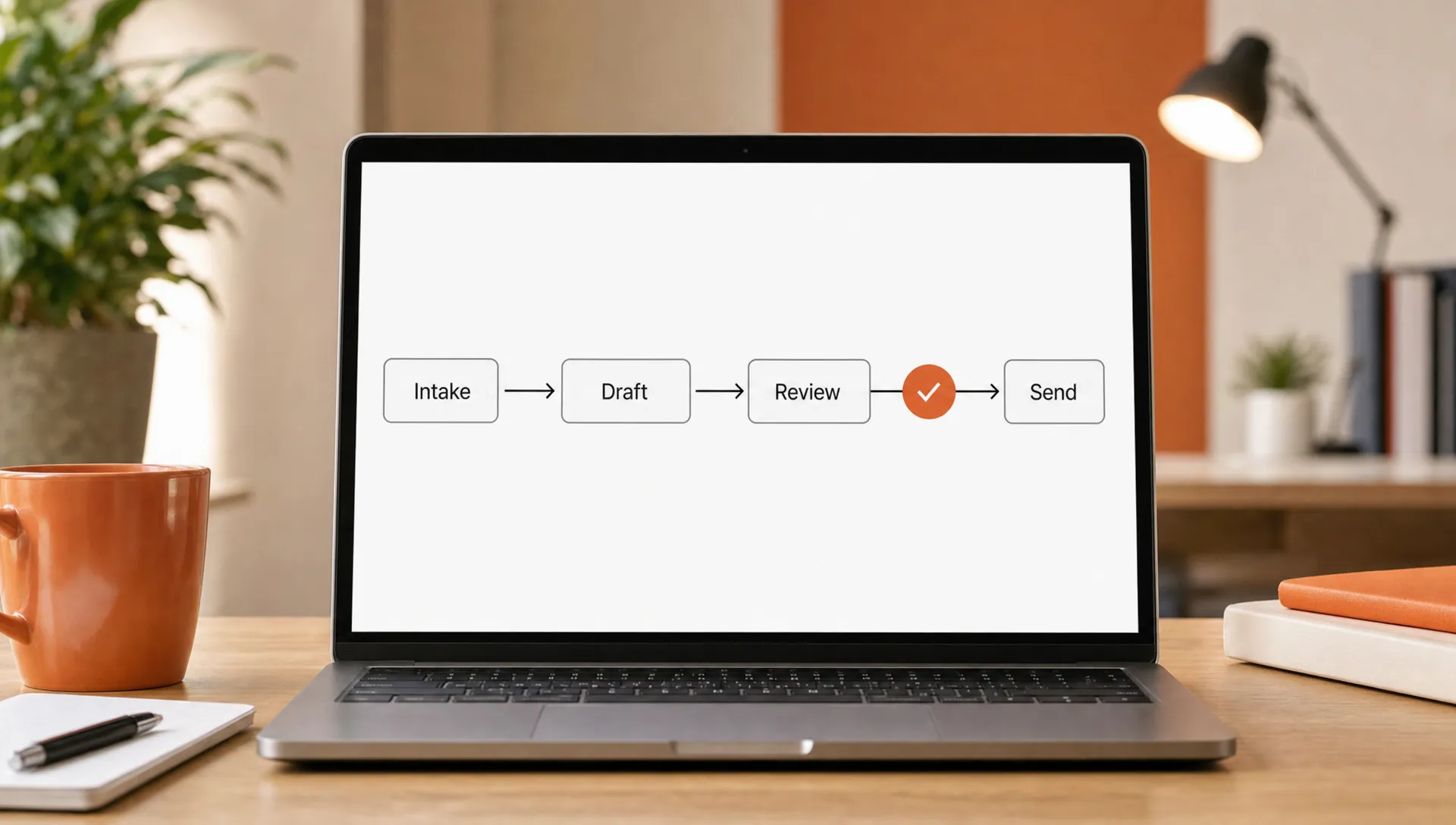
A boring handoff has a defined trigger, a defined artifact and a defined next owner. For example, when a client completes onboarding, the system creates a research brief with source links and open questions. When reporting data is pulled, the system flags changes that need commentary before the account manager writes the narrative. When a client call ends, the system turns decisions into follow-up tasks tied to the account.
This is where many agency experiments break. The draft gets created, but the next step is still manual. If that is happening in your shop, this deeper breakdown of why marketing with AI fails when the handoff is still manual is worth keeping nearby.
Review should sit close to risk
Not every output deserves the same level of human review. A summary of internal notes, a reporting first draft, a client-facing email and a strategic recommendation do not carry the same risk.
Agencies can learn from companies using AI for marketing by sorting review based on the damage a bad output would cause. Low-risk internal drafts can move quickly. Client-facing claims, sensitive recommendations and anything tied to strategy need a human owner before they leave the building.
| Workflow | What the system can draft | What a human should check |
|---|---|---|
| Research | Summaries, themes and source extracts | Whether the source is relevant and the claim is fair |
| Reporting | First-pass commentary and metric callouts | Whether the explanation matches what actually happened |
| Content production | Draft angles, outlines and versioning | Voice, accuracy, promises and client-specific rules |
| CRM follow-up | Task drafts and suggested next messages | Timing, relationship context and ownership |
| SOPs | Process drafts from real work steps | Missing edge cases and unclear accountability |
This is not about slowing the team down. It is about protecting senior attention for the places where judgment matters. A founder should not be proofreading every internal summary. They should be pulled into the work that affects client trust, scope or strategy.
Repeatable workflows matter more than flashy demos
One-off prompts can make a team curious. Repeatable workflows change the month.
The agencies that get real operational value usually start with work that happens every week or every month: onboarding, research, reporting, QA, follow-up, content versioning, CRM cleanup, SOP updates and production prep. These are the places where a small amount of structure can reduce a lot of coordination drag.
That is also the practical lesson from companies using AI for marketing. The most useful systems are not magic creative machines. They are repeatable paths that take known inputs, produce a predictable draft or decision aid, then pass it to the right person.
For example, a service business page has to carry specific proof, objections and local context. A family relocation company such as Homeward Australia needs trust signals around rentals, schools and arrival support, not generic lifestyle copy. If an agency were producing work for a client like that, the internal system would need to gather the right details before anyone asks for a page draft, ad variation or email sequence.
That is the difference between “make me content” and “prepare the next production step from the facts we already trust.” If you want a broader map of where this applies inside agency delivery, this guide to agency workflows to automate covers common starting points.
Source trails reduce rework
Agency owners already know the pain of a polished draft with a weak foundation. The copy reads well, but nobody knows where the claim came from. The report sounds confident, but the account lead cannot defend the takeaway on a client call. The research summary feels useful until a strategist asks for the source.
Companies using AI for marketing have the same problem at scale, which is why the serious teams keep evidence close to the output. For agencies, a source trail is one of the simplest ways to protect margin because it cuts down on avoidable rework.
A source trail can be basic. It might include the client page used, call transcript section, CRM field, report tab, competitor page, review snippet or approved brand note behind a draft. The key is that the next person can check the basis of the work without starting over.
This matters most in research, reporting and strategy support. If your team cannot tell which source drove a recommendation, the system is creating risk instead of removing work. For research-heavy delivery, this piece on why AI marketing research needs a source trail goes deeper into the mechanics.
The right metric is drag removed from delivery
Many agency teams judge new tools by whether the output looks impressive in a demo. That is the wrong test for a delivery business. The better test is whether the workflow removes drag from the work your team already has to do.
When you study companies using AI for marketing, look for the operational pattern behind the public output. Did they reduce time spent gathering context? Did they make approvals clearer? Did they catch issues earlier? Did they help a less senior person prepare better work before a senior reviewer got involved?
Those questions map cleanly to agency economics. The work is useful if it reduces re-explaining, reformatting, rechecking, chasing, copying between tools or rebuilding the same artifact every month. That is where margin gets protected, because the system is absorbing coordination work that would otherwise land on billable people.
A practical scorecard can stay simple:
| Question | Good sign | Bad sign |
|---|---|---|
| Does it start from real client context? | The draft reflects known details | The team rewrites basic facts |
| Does it create an artifact the team already needs? | It fits an existing workflow | It creates another thing to manage |
| Does it move to the next owner automatically? | The handoff is clear | Someone has to remember to send it |
| Does review match the risk level? | Senior time is used carefully | Everything waits for the same person |
| Can the team check the source? | Claims are traceable | The output sounds right but cannot be defended |
If the answer is weak on most of these, the tool may still be interesting. It just is not an operating system for the agency yet.
Start with one workflow that already hurts
Do not start by asking, “What can we do with AI?” Start with the workflow your team already complains about.
For a performance agency, that might be weekly reporting commentary or launch QA. For a content and SEO shop, it might be brief creation, source gathering or first-pass internal edits. For a social studio, it might be turning approved ideas into channel-specific drafts and review queues. For a PR firm, it might be media list upkeep, briefing docs or follow-up discipline. For a local or franchise marketing agency, it might be location intake, review response prep or recurring campaign setup.
The common thread is not the service line. It is repeatability.
Pick a workflow with enough volume to matter, but not so much risk that every mistake becomes a client emergency. Then write down the current path from intake to output. Include who touches it, what they need, where work stalls and what “done” actually means.
That map will tell you more than another tool trial. It will show whether the missing piece is context, routing, review, source capture, task creation or maintenance.
FAQ
What can agencies learn from companies using AI for marketing? Agencies should study the operating pattern, not just the visible campaign. The main lessons are cleaner inputs, repeatable workflows, clearer handoffs, source trails and human review tied to risk.
Should an agency copy the same tools large companies use? Usually no. A mid-sized agency needs systems that fit its own delivery model, tools, team roles and client work. The right question is which recurring workflow burns hours and can be made easier to start, draft, check or route.
Where should an agency start if past AI tools did not stick? Start with one painful workflow that already has repeat volume, such as onboarding research, reporting commentary, CRM follow-up or production QA. Map the current handoff before choosing the tool.
How do agencies keep quality from slipping? Keep human review close to client risk. Let systems prepare drafts, summaries and task routing, but have experienced people check claims, recommendations, client-facing language and anything that affects trust.
What to do this week
Pick one workflow in your agency that creates repeat drag. Do not choose the trendiest use case. Choose the one your team quietly pays for every week through rework, chasing, messy context or senior people cleaning up avoidable issues.
Write down the current path in plain language: where the work starts, what information is missing, who touches it, what gets copied between tools, who reviews it and where it goes next. Then mark the first place where a better intake packet, draft, source trail, review queue or follow-up task would remove friction.
If you want an outside operator to help design and run that layer, Archer Scaling AI installs and runs AI ops systems for marketing agencies. If you want to talk through where the system should sit in your agency, book a free 30-minute intro call as a conversation about your operations, not a sales call.