AI Marketing Research Needs a Source Trail Your Team Can Check
AI marketing research needs checkable sources. Build a source trail that protects agency margin, review time and client trust.
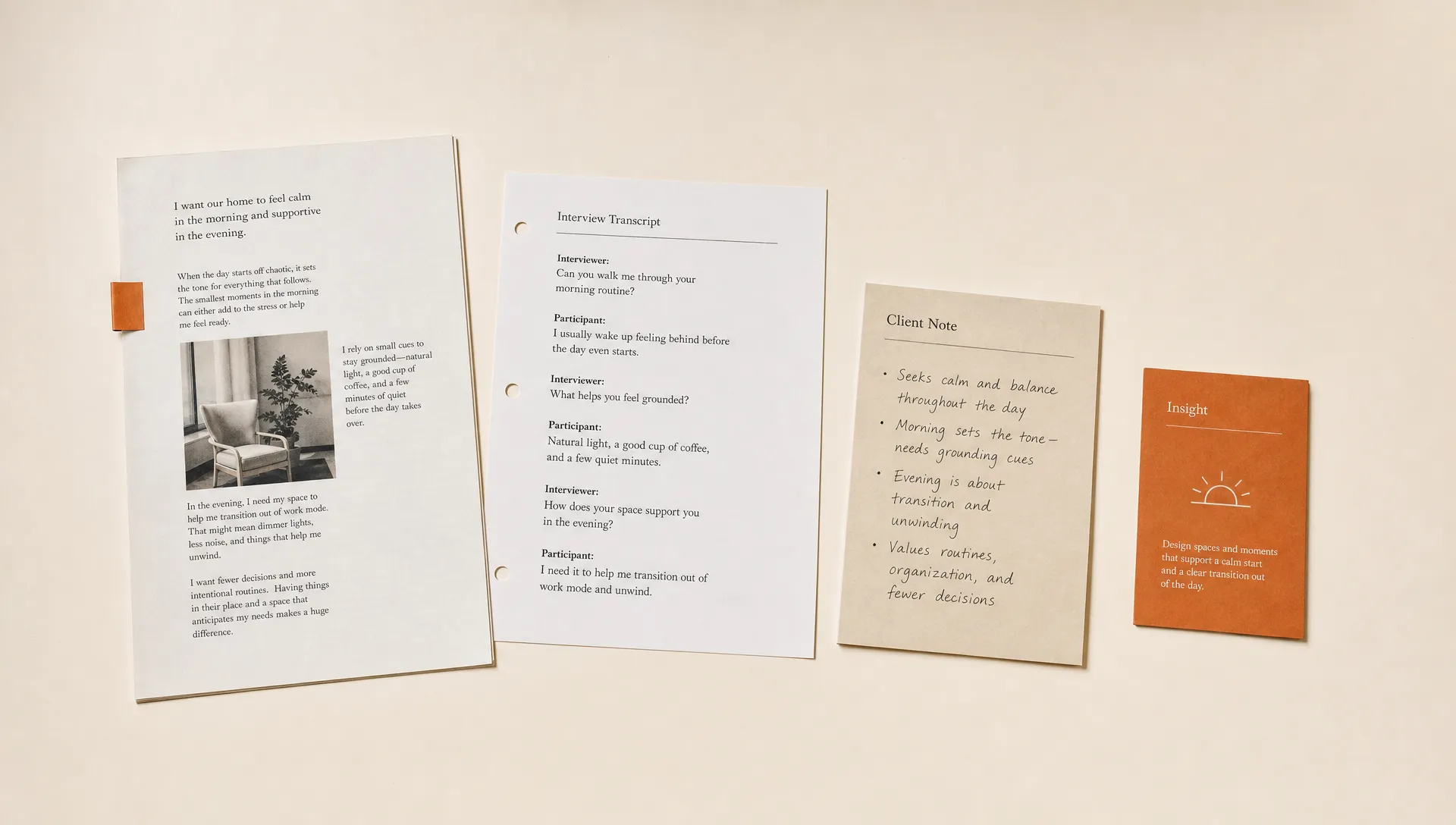
AI marketing research breaks down when the output looks polished but nobody can tell where the claim came from. In an agency, that usually means strategy rework, nervous account leads, wasted review time and senior people checking details that should have been captured upstream. A source trail fixes that by making each useful insight traceable to a page, transcript, brief, report, spreadsheet or client note your team can inspect before it becomes strategy, copy, creative direction or client-facing commentary.
AI marketing research needs a source trail, not just a summary
A polished summary is not enough for agency delivery. Your team needs to know what the system read, what it pulled out and which claim each source supports.
The margin problem shows up later if you skip this. A strategist spots a weak claim in a deck. A writer asks where a customer quote came from. An account lead hesitates before sending commentary because the evidence feels thin. None of those moments looks dramatic on a timesheet, but they add up across retainers.
A good source trail turns research from a one-off artifact into something your team can reuse. It lets a reviewer check the evidence without rerunning the whole job. It also helps juniors learn the agency’s standards faster because they can see the difference between a usable insight and a loose assumption.
The goal is not more documentation for its own sake. The goal is fewer mystery claims entering client work.
The source trail is part of delivery, not an appendix
The source trail should sit beside the work product while the work is moving, not in a forgotten folder after the fact. If the team only gathers sources at the end, the checking work becomes cleanup. Cleanup is where senior time gets burned.
For AI marketing research, the source trail should capture the path from input to usable claim. That usually means the original file or URL, the extracted detail, the context around that detail and the place where the team plans to use it. If any of those are missing, the output may still read well, but it is harder to trust.
This is especially true when research feeds a repeatable workflow: onboarding, competitor review, positioning work, content planning, reporting commentary or sales follow-up. If you are still choosing which parts of research to systemize first, start with research workflows you can automate now and add source capture as a required field from the start.
A research process without source capture creates a hidden queue for review. A research process with source capture lets review happen while the work is still cheap to change.
Where source trails protect margin
Source trails matter most where research leaves one person’s hands and becomes someone else’s job. That is where agency margin gets nicked by rework, Slack archaeology and “who knows where this came from?” messages.
Client onboarding and intake
During onboarding, the agency is collecting the client’s positioning, offer details, past performance, customer language, approvals and market context. This is fertile ground for automation, but only if the intake output can be checked.
If a system summarizes a client’s intake form and website, the account lead should be able to see exactly which form answer or page backs up each claim. If it pulls a positioning angle from a sales transcript, the timestamp should be close by. If it flags missing context, that gap should become a follow-up question, not a vague note.
AI marketing research is useful here because it can scan more raw material than a busy strategist has time to read before the first call. It becomes risky when the summarized version loses its evidence.
Content, creative and campaign planning
Planning work often turns research into angles, briefs, hooks, proof points and objections. This is where unsupported claims can spread quickly.
A content team writing for a client in a regulated or technical space should not rely on a generic summary. If the topic touches UAE company formation, residency or corporate compliance, for example, the source trail should point to subject-matter pages such as transparent UAE company setup and compliance support, then show which detail was used and where it appears in the brief.
That does not mean every source needs to be perfect or final. It means your team can tell the difference between a primary source, a client-supplied fact, a third-party explanation and a working assumption. Those categories should not blur inside a brief.
Reporting and postmortems
Reporting research has its own source-trail problem. The numbers may live in platforms, spreadsheets and dashboards, but the commentary often becomes detached from the evidence.
A monthly report might say performance softened because the audience mix changed, creative fatigue increased or a landing page update created friction. Each of those claims needs a path back to the data or observation that triggered it. Otherwise, the account lead has to defend a sentence they did not verify.
A good source trail keeps AI marketing research from turning reporting into confident narration. The system can flag patterns and draft commentary, but the team still needs to see which metric, note or client event supports the explanation.

A source-trail standard your team can actually follow
Do not build a standard so heavy that nobody uses it. Agency teams already have enough places to update. The source trail has to be simple enough to fit inside the brief, task, doc or project record where the work already lives.
The standard for AI marketing research should be boring, clear and repeatable. Every important claim should have a source, context and owner. If a claim is not important enough to source, it probably should not drive strategy, copy or client commentary.
| Field | What your team records | Why it matters |
|---|---|---|
| Claim | One plain-English sentence | Prevents vague findings from entering the work |
| Source | URL, file name, transcript timestamp, report tab or client note | Lets a reviewer inspect the evidence quickly |
| Context | Segment, market, client, query or campaign tied to the claim | Stops the team from applying a detail too broadly |
| Status | Accepted, needs context or do not use | Keeps weak claims from moving forward by accident |
| Owner | Person who accepted the claim for use | Creates accountability without a long approval chain |
| Used in | Brief, report, deck, email, SOP or task | Connects research to actual delivery work |
This table is not meant to become another spreadsheet that floats around untouched. Treat it as the minimum schema your systems and people need to share.
Review should be fast, not theatrical
Source checking should not turn into an academic ritual. Your reviewers do not need to reread every source from top to bottom. They need to see the claims most likely to affect the client relationship, the strategy direction or the production brief.
A useful review lane has three simple outcomes: accepted, needs context or do not use. That is enough for most agency delivery. The reviewer can approve strong evidence, send unclear items back with a specific question and block claims that should not appear in client work.
When AI marketing research has a review lane like this, senior people spend less time reconstructing the process. They look at the claim, inspect the source and make a decision. The system should carry the boring context so the reviewer can spend judgment where it matters.
This is also where human QA belongs. If you want a deeper breakdown of review points across agency work, the same principle applies in where human review belongs in agency workflows: put the human where judgment is needed, not where copy-paste work accumulated.
The handoff is where the trail earns its keep
A source trail is only useful if it survives the handoff. Research usually passes from intake to strategy, from strategy to production, from production to QA and from QA to the account lead. If the evidence drops out at any point, the next person has to trust a summary they did not create.
Build the trail into the handoff artifact. If the strategist receives a research brief, the source trail should travel with it. If the writer receives a content brief, the approved claims should be visible. If the account lead receives reporting notes, the commentary should link back to the metric or event that supports it.
This is one reason AI marketing research fails to improve agency economics when the handoff stays manual. The system may create a draft quickly, but the team still spends time moving context between tools and people. That is the expensive part. A similar pattern shows up when a manual handoff erases the benefit of automation across intake, production, QA and reporting.
The handoff test is simple: can the next person use the work without asking where the evidence came from?
What breaks when the trail is missing
The first sign is not usually a bad deliverable. It is hesitation. Someone pauses before sending a report, rewrites a brief from scratch or pulls a senior lead into a thread because the research feels hard to defend.
Common symptoms include:
- Client-facing claims with no source attached
- Strategy notes that mix facts, guesses and preferences
- Writers asking for evidence after the brief is already assigned
- Reporting commentary that sounds confident but cannot be checked quickly
- Repeated research on the same client, market or competitor because prior work was not reusable
These are not tool problems alone. They are workflow design problems. A model can summarize inputs, but your operation decides whether the evidence travels with the summary.
If your team already tried a few tools and they did not stick, check whether the failure was really about source trails and handoffs. Many tools look useful in a demo because the sample output is tidy. Real agency work is messier because the research has to survive clients, deadlines, reviewers and shifting scope.
Frequently asked questions
What is a source trail in AI marketing research? A source trail is the checkable path from a research claim back to the material that supports it. That can be a URL, intake answer, transcript timestamp, client note, report tab or file name.
Does every research note need a source? No. Source the claims that affect strategy, client-facing commentary, production briefs, approvals or performance explanations. Low-stakes notes can stay lightweight.
Who should own the source trail? Ownership depends on the workflow. The person or system creating the research should capture the source, but the person accepting the claim for client work should mark it as usable.
Will this slow the team down? It may add a small amount of structure upfront, but it should reduce rework, repeated questions and senior review time later. If it feels slow, the standard is probably too heavy or lives outside the team’s normal task flow.
What to do next this week
Pick one repeatable research job inside your agency. Good candidates are client onboarding summaries, competitor scans, content briefs, reporting commentary or voice-of-customer review. Do not start with every workflow at once.
For that one job, decide which claims need evidence attached. Create a simple source-trail field in the place your team already works, whether that is a doc, project management task, brief template or CRM note. Run the next few pieces of work through that standard and watch where the trail breaks: intake, extraction, review, handoff or client-facing output.
For AI marketing research, this is the practical line between a neat draft and a delivery system your team can trust. Whether or not you ever hire anyone to help, the next step is to make evidence travel with the work.
For context, Archer Scaling AI installs and runs AI ops systems for marketing agencies. If it would be useful to talk through your operations, start with a free 30-minute intro call, framed as a conversation about where research, handoffs and review are costing time.