AI Landing Pages Need a Review Path Before Client Approval
Landing pages AI need a review path before client approval. Build intake, QA and handoff checks that protect agency margin.

When people search for landing pages ai, they usually picture faster drafts, better variants and less blank-page time. In an agency, the bigger issue is what happens after the draft exists: who reviews it, what they check and what reaches the client for approval.
That gap is where hours disappear. A page can look finished on the surface and still carry weak positioning, missed intake details, broken handoffs, odd claims, mismatched CTAs or a client-specific compliance issue that nobody owned.
How landing pages ai changes the approval path
A landing page workflow used to move through familiar hands: strategist, copywriter, designer, developer or builder, then account lead. The work still moved fast or slow depending on the team, but each person usually knew where their judgment started and ended.
When a draft comes from a prompt, template or page generator, that ownership gets blurry. The page may include competent copy, a usable section order and decent form placement before anyone has made a real decision. That can make the work feel closer to client-ready than it is.
The practical promise of landing pages ai is speed through the first version, not removal of review. If your team treats the draft as already approved internally, the client becomes the reviewer of things your agency should have caught.
That creates a bad client experience and a margin problem. The team spends less time drafting but more time explaining, revising and reopening decisions that should have been settled before the approval link went out.
The review path starts before the first draft
The first review checkpoint is not copy. It is intake quality.
If the brief is thin, the draft will fill the gaps with generic language. That may be fine for a placeholder, but it is risky for client approval because the client sees the page as agency judgment, not machine output. They will not care that the intake form missed the offer nuance or that the source doc was outdated.
For a busy delivery lead, landing pages ai should force a cleaner intake process. Before any draft is created, someone should confirm the offer, audience, traffic source, proof points, required exclusions, brand limits, page goal and approval owner. These do not need a long meeting. They need a consistent pre-draft record that the production team can trust.
A good test is simple: if the person reviewing the page cannot see why a section exists, the intake was not strong enough. The system may still produce a page, but your team will be guessing during review.
This is also where scope control starts. If the approved intake says the page is for one campaign and one conversion action, the review path has something to defend when a client tries to turn final approval into a strategy reset.
Give each reviewer one job, not the whole page
Most agency review paths fail because every reviewer is asked to react to everything. The strategist comments on button spacing. The designer rewrites the headline. The account lead catches a broken proof point after the page has already been built.
When landing pages ai is introduced, the review path needs tighter lanes because the first draft arrives with many decisions already bundled together. If nobody separates those decisions, feedback becomes a messy thread instead of a controlled pass.
Assign review by risk, not seniority. A junior team member can check whether the page matches the intake. A strategist should judge the offer logic. A designer should review hierarchy and usability. The account lead should review client fit, sensitive language and approval readiness.
Here is a simple split that works across most agency types:
| Review layer | Main question | Common owner |
|---|---|---|
| Intake match | Does the page reflect the approved brief? | Producer or project manager |
| Offer logic | Is the promise clear and believable? | Strategist or senior account lead |
| Brand fit | Does it sound and look like the client? | Copy lead, design lead or brand owner |
| Build QA | Do forms, links, tracking and mobile views work? | Builder, developer or QA owner |
| Approval readiness | Is this safe to send to the client? | Account lead or delivery lead |
The final owner matters. Specialty reviewers can pass their lanes, but one person needs authority to decide whether the page is ready for client review. If that person is missing, approval becomes group chat consensus, which is slow and hard to defend.
For a deeper checklist approach, this related guide on a repeatable landing page QA checklist breaks the checks into a more detailed production pass.
What should be checked before a client sees the page
A review path should catch the expensive mistakes first. Spelling matters, but a typo is not usually what burns the most time. The bigger issues are wrong assumptions, weak offer structure, vague proof and broken conversion paths.
This is where landing pages ai can create false confidence. The draft may sound polished even when it has invented detail, overgeneralized the client’s market or buried the reason someone should take action. Polished language can hide weak thinking.
Before client approval, the internal reviewer should check five areas in plain language:
- Does the page match the approved offer and campaign context?
- Are any claims unsupported, exaggerated or too specific for the source material?
- Is the next action obvious without reading the whole page?
- Does the mobile version preserve the same logic as desktop?
- Are forms, calendars, links, pixels and thank-you paths working?
That last point is where many teams lose margin. A page that is strategically fine but operationally broken still comes back as agency rework. The client does not separate copy, build, tracking and handoff. To them, it is one deliverable.
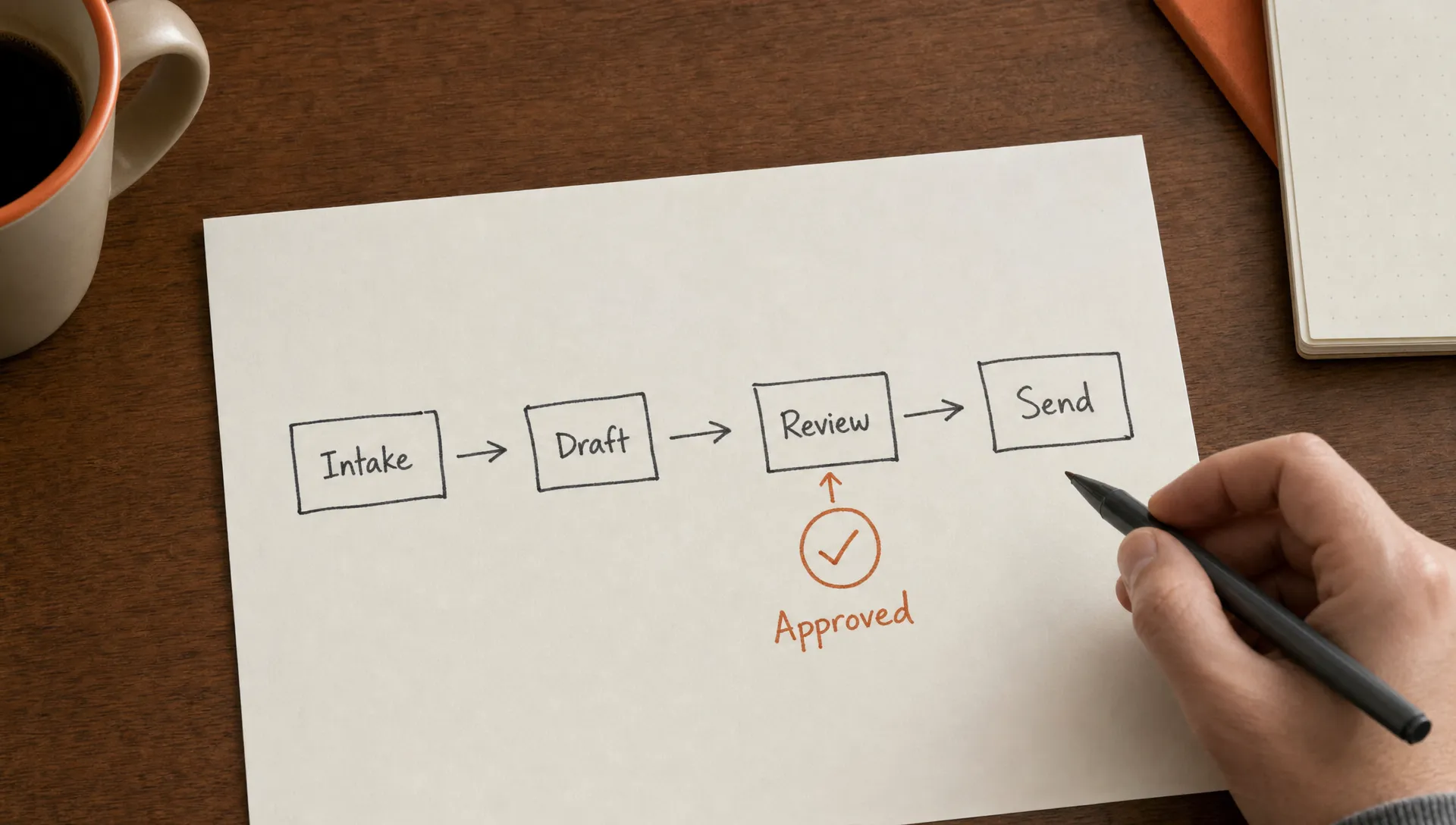
Client approval should be a gate, not a workshop
Client approval goes wrong when the page is sent with no frame. The client opens the link and comments on whatever catches their eye first. That might be a real issue, but it might also be a preference that restarts settled work.
Treat landing pages ai drafts the same way you would treat any agency deliverable that moved through production quickly: send the client a tight review frame. Tell them what has already been checked, what decision you need from them and what kind of feedback belongs in this round.
For example, the approval note might say the internal team has reviewed offer match, brand fit, mobile layout and form paths. The client’s job is to confirm accuracy, required language and any final stakeholder concerns. That does not prevent feedback, but it stops the approval round from becoming an open-ended workshop.
This matters even more when the page includes dynamic content, listings, inventory, location data or market-specific wording. If your team studies public examples outside the agency world, an AI-assisted property homepage is a useful reminder that generated search, listing and location experiences still need human checks around accuracy, relevance and user expectations before anyone treats the page as finished.
The more complex the page, the more explicit the approval gate needs to be. Otherwise your team will confuse client participation with client QA.
Build the path into the toolchain
A review path is only useful if it shows up where work happens. A PDF checklist that nobody opens will not change delivery behavior.
The right test for landing pages ai inside an agency is whether the review steps can live inside the actual flow: intake form, project board, page builder, QA doc, Slack thread, CRM task or client approval tool. The team should not have to remember the system. The system should make the next required check obvious.
That does not mean every agency needs a complicated build. Start with the places where rework already happens. If the account lead keeps finding missing client context, put an intake completeness gate before drafting. If designers are rebuilding sections because the draft ignores the page template, add a template match check before design. If clients keep finding broken forms, make form testing a required status before approval.
The review path should also create a record. Not a giant compliance file, just enough evidence to answer: who checked the page, what did they check and what changed before the client saw it?
If you are testing a new tool, use one live production task instead of a demo prompt. This guide on how to test AI software against a real delivery task gives a practical way to do that without turning the evaluation into another side project.
The margin problem is hidden in the rework
A faster first draft is easy to notice. Rework is harder to see because it arrives in small pieces: one extra client call, one reopened copy doc, one designer pulled back into a page they already finished, one account lead rewriting the approval note late in the day.
Landing pages ai improves agency economics only when the saved drafting time is not spent later on confusion. That means the review path has to protect the same things your best delivery leads already protect manually: clear inputs, defined ownership, client-ready judgment and clean handoffs.
This is why human review is not a philosophical issue. It is an operating decision. Where the work carries client trust, client data, claims, approvals or money-moving actions, someone has to own the pass-fail call. This related article on where human review belongs in agency workflows goes deeper on that boundary.
The goal is not to slow the team down. The goal is to stop preventable rework from hiding inside faster production.
A simple review path you can install this week
You do not need a full internal rebuild to start. Pick one page type your team produces often, such as campaign landing pages, local service pages, lead magnet pages, product launch pages or event registration pages.
Create one short pre-client review path for that page type. Keep it boring and enforceable.
The path should answer six questions: what intake is required, who creates the first draft, who reviews offer logic, who checks brand and page structure, who tests the build and who sends the approval note.
Then run it on the next real page, not a fake sample. After the client approval round, look at what still came back as rework. Add only the missing checks that would have prevented that rework. If a check would not have changed the outcome, do not add it.
This is how landing pages ai becomes part of delivery instead of another experiment. The workflow gets tighter every time the team sees where the draft was useful and where judgment still had to step in.
Frequently asked questions
Should landing pages ai drafts ever go straight to a client? No. A draft can be useful within minutes, but client approval needs an internal pass for intake match, offer clarity, brand fit, working links, forms and any claims that require proof.
Who should own the final approval before the client sees the page? One person should own the final pass-or-fail decision, usually the account lead, delivery lead or another person close enough to client context and delivery risk. Other reviewers can check their lanes, but the final owner prevents scattered feedback from becoming the process.
How much review is enough for a simple landing page? Enough to catch the risks that would create rework or damage trust. A simple page may only need intake match, copy logic, mobile view, form testing and approval framing. A regulated, data-heavy or stakeholder-heavy page needs more.
What is the biggest mistake agencies make with AI-assisted page workflows? They measure the tool by draft speed alone. The better measure is whether total delivery time falls after internal review, client feedback and revisions are included.
What to do next in your own agency
This week, take the last three landing pages your team sent for approval and trace where rework entered the process. Mark whether the issue came from intake, draft quality, strategy review, design review, build QA, approval framing or client-side change.
You will probably see a pattern. That pattern tells you where the first review gate belongs.
If the problem is intake, fix the brief before you touch the tool. If the problem is unclear ownership, assign one final approval owner. If the problem is build mistakes, make the page impossible to send until forms, links and mobile views have been checked. If the problem is clients reopening strategy, rewrite the approval note so the round has boundaries.
Archer Scaling AI installs and runs AI ops systems for marketing agencies, including the review paths, handoffs and operating rules that keep internal delivery from turning into rework.
If you want to talk through where this would fit in your agency, you can book a free 30-minute intro call. It is a conversation about your operations, not a sales call or audit.