When a Market Agency Needs Systems Before More Staff
Learn when a market agency needs systems before more staff, how to spot operational debt, and what to fix first to protect margins.
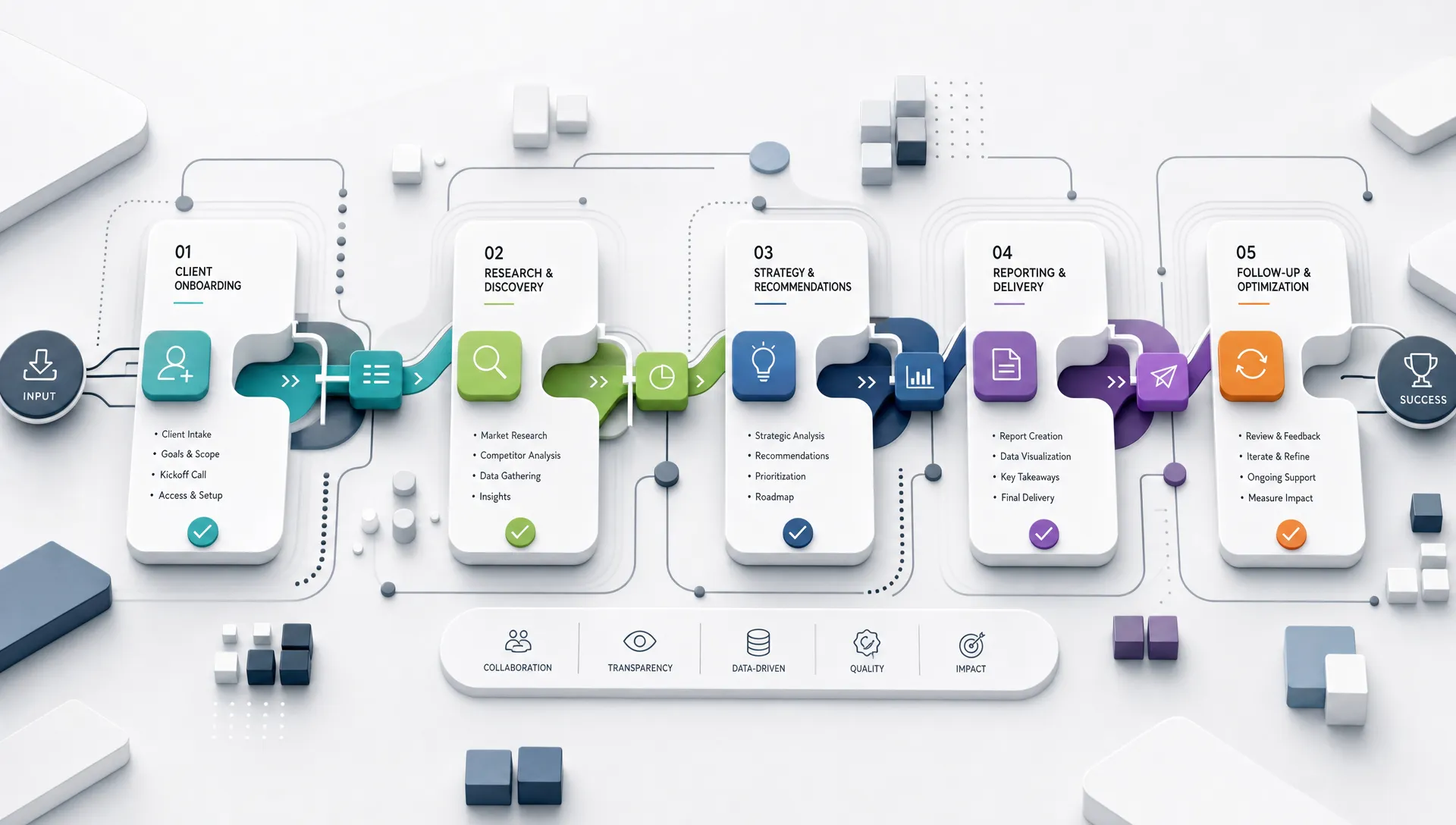
Hiring looks like the cleanest way out of delivery pressure. A client renews, two more deals are in the pipeline, the account team is stretched and the founder starts thinking about a new strategist, account manager or coordinator.
Sometimes that is the right move. But for many B2B agencies, especially a market agency handling research-heavy positioning, campaign strategy, content or demand generation, more staff only adds capacity to a workflow that is already leaking margin.
A market agency needs systems before more staff when the problem is not a lack of people, but a lack of repeatability. If every client onboarding, report, research sprint or content handoff requires human memory and Slack archaeology, a new hire will inherit the chaos. They may help for a month or two, then become another person to brief, manage, unblock and QA.
The better question is not whether your agency is busy. It is whether your current work can be delivered predictably by the team you already have.
The difference between a staffing problem and a systems problem
A staffing problem is simple: the work is clear, the inputs are ready, the process is stable and there are not enough hands to execute it. In that case, hiring can raise capacity.
A systems problem is different. The work changes shape every time it moves from sales to delivery, from strategy to execution or from data collection to client reporting. The team is busy, but much of that busyness is translation, reconstruction and chasing missing context.
Agencies often misread systems problems as headcount problems because both feel the same day to day. People are overloaded. Deadlines slip. Senior team members become bottlenecks. Clients ask questions that should have been answered earlier. Everyone says they need help.
The giveaway is repetition. If the same confusion appears across multiple accounts, it is not a person problem. It is an operating system problem.
Signs your agency needs systems before more staff
You do not need a full operations audit to see the pattern. Most agencies can spot it by looking at where senior attention goes during a normal week.
- Every project starts from scratch: The team rebuilds briefs, research docs, calendars, reporting templates and client-facing explanations for each account instead of adapting from a standard structure.
- Client onboarding depends on memory: Critical context sits in sales calls, notes, CRM fields or the founder's head, so delivery starts with avoidable follow-up questions.
- Reporting takes too long for the value it creates: The team spends more time collecting, formatting and checking data than interpreting what the client should do next.
- Quality control happens late: Issues are caught right before a client meeting, after creative has been built or once the strategist is already overloaded.
- Your best people do low-leverage work: Senior staff are copying data between tools, rewriting instructions, chasing assets, standardizing notes or explaining the same process again.
Any one of these can be a nuisance. Together, they are margin drag. Adding people before fixing them can make the agency feel larger without making it more profitable.
A quick diagnostic for agency leaders
Use this table to separate true hiring needs from operational debt. It is not perfect, but it forces the right conversation before you open a role.
| What you are seeing | More staff may help if... | Systems should come first if... |
|---|---|---|
| Deadlines are slipping | The process is documented and the team simply lacks execution hours | Work waits on unclear briefs, missing inputs or repeated approvals |
| Senior staff are overloaded | They are making judgment calls only they can make | They are fixing formatting, filling gaps or answering process questions |
| Client communication is messy | One role owns too many relationships | Updates, next steps and expectations are not standardized |
| Delivery quality varies | Different clients need different levels of expertise | The same deliverable changes quality depending on who touched it |
| New hires ramp slowly | The role requires deep domain expertise | Training is mostly shadowing and tribal knowledge |
The easiest test is to imagine hiring tomorrow. Could the new person succeed with documented workflows, clear inputs and defined quality standards? If not, the first investment should be systems.
What to systemize before you hire
Most agency systems do not need to be complex. They need to remove repeatable decision fatigue from work that should not require fresh invention every week.
Sales-to-delivery handoff
This is where many margin problems begin. Sales closes the deal with context spread across call recordings, proposal language, private notes and informal assumptions. Delivery receives a client name, a scope and a deadline, then has to rediscover what was promised.
A usable handoff system captures the client's goals, constraints, stakeholders, offer, ICP, positioning, known risks and promised deliverables in a delivery-ready format. It should also flag anything that is ambiguous before the kickoff call, not after work has already started.
If this is one of your weak spots, the deeper guide on marketing agency client onboarding that actually scales breaks down how to reduce delays and rework at the start of an engagement.
Research and strategy inputs
Research-heavy agencies lose hours when every strategist uses a different structure for market scans, competitive reviews, customer voice, keyword discovery or campaign planning. Strategy should still require judgment, but the collection and organization of inputs should not be reinvented each time.
A good research system defines source hierarchies, required fields, review gates and reusable output formats. The strategist can then spend more time interpreting the market and less time cleaning the workspace.
Reporting and client updates
Reporting is a classic false hiring signal. When reporting is manual, the team assumes it needs another account manager or analyst. Often the real issue is that metric definitions are inconsistent, data assembly is separate for every client and insights are written from scratch without a standard review flow.
A better system separates data collection, QA, analysis and client narrative. Automation can support the repeatable parts, while humans keep ownership of interpretation and recommendations.
Internal SOPs and role clarity
If your SOPs are scattered, outdated or too vague to run without explanation, a new hire will depend on the same busy people you are trying to free up. SOPs should not be museum documents. They should be embedded in the workflow, close to where the work happens, with examples of good outputs and common mistakes.
This is also where training and systems meet. Formal learning can help people build baseline competence, especially in technical areas. For example, teams pursuing IT, project management or cloud credentials may benefit from structured study guides, practice questions and readiness tracking. But inside an agency, education alone is not enough. People also need your way of delivering work documented in a form they can follow.
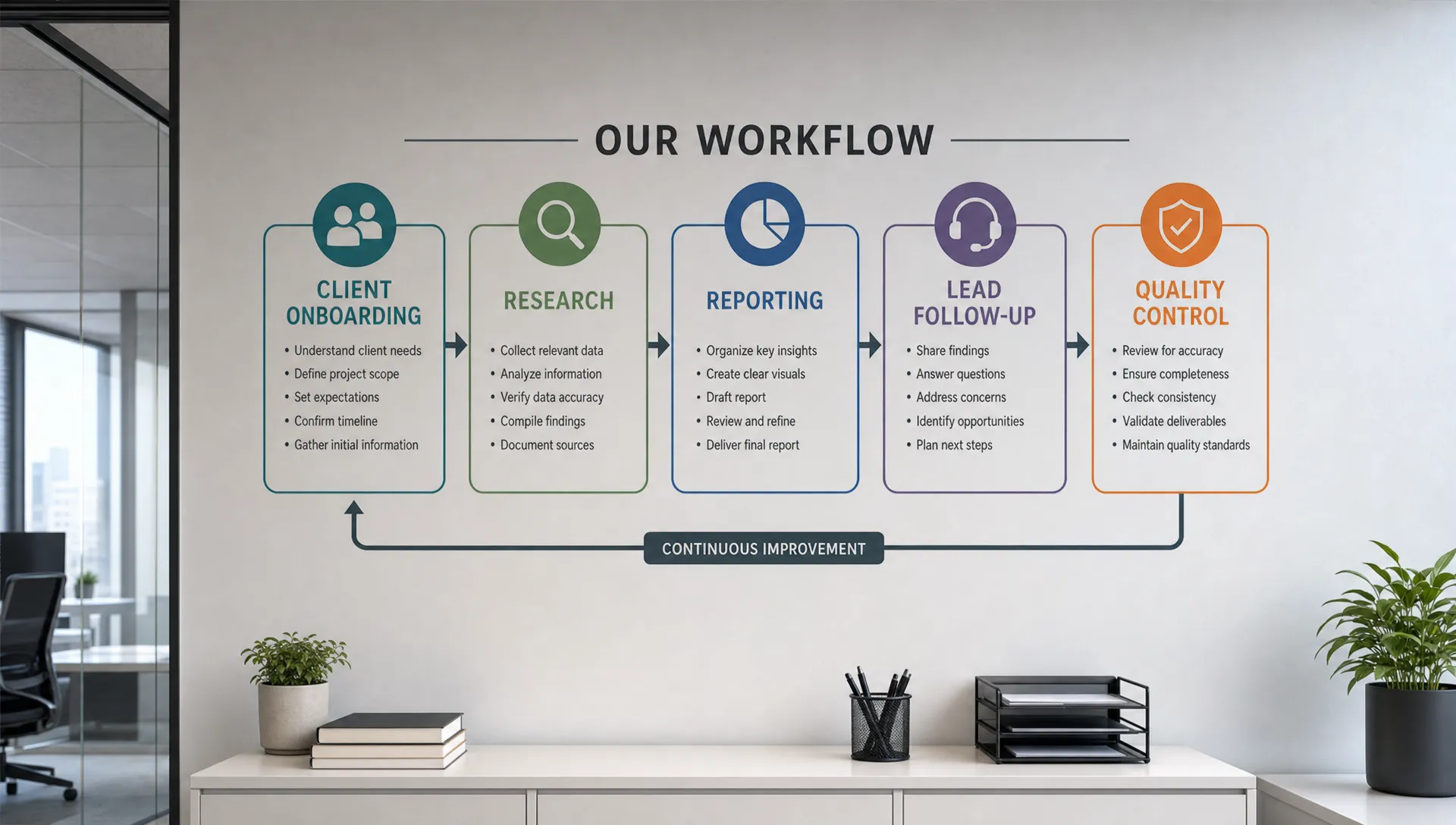
Why hiring too early can lower margin
A new employee is rarely just salary. There is recruiting time, onboarding time, management time, tool access, QA load and the cost of mistakes during ramp-up. If the agency has weak systems, those hidden costs expand.
The new hire asks where files live. Someone explains the naming convention, then admits it is not always followed. They ask which report template to use. The answer depends on the client. They ask what good research looks like. A strategist sends three old examples and says to use judgment.
None of that is a character flaw. It is what happens when an agency grows faster than its operations.
Hiring too early can also hide the real bottleneck. The team feels relief because more hands are available, but the underlying workflow still requires too many human touches. A few months later, the same pressure returns at a higher payroll level.
That is why operational leverage matters. The best agency systems make each capable person more productive before leadership decides whether the team truly needs another seat. If you want to explore this margin-first view further, Archer's article on agency marketing systems that protect your margin covers the core delivery areas where repeatable systems usually pay off first.
What a good system should do
A useful agency system is not a 40-page process document nobody opens. It is a working layer that makes the right action easier than the wrong one.
The strongest systems usually do five things:
- Capture inputs once: Information from sales, onboarding and client communication should flow into delivery without manual retyping.
- Standardize repeatable work: Briefs, research structures, reporting formats, QA checks and follow-up steps should have defaults.
- Preserve human judgment: Strategy, positioning, creative direction and client counsel should stay with experienced people.
- Expose bottlenecks early: Missing assets, unclear goals or delayed approvals should be visible before they threaten delivery.
- Create documentation as work happens: The process should leave behind clean records, not require a separate documentation sprint later.
This is where AI operations can be useful when applied to delivery workflows rather than novelty content. AI can help summarize calls, route information, draft structured briefs, compare inputs against checklists, assemble reporting context and maintain SOPs. The point is not to remove the team. It is to stop using skilled people as the connective tissue between broken processes.
When more staff is the right answer
Systems are not a religion. Some agencies really do need more people.
Hiring makes sense when demand is stable, margins are healthy and the work that would go to the new hire is already defined. It also makes sense when the constraint is judgment, leadership or a specialized skill that cannot be replaced by a workflow.
For example, a senior strategist may be needed if the agency is expanding into a more complex market. A strong account lead may be necessary if client relationships have outgrown founder involvement. A creative director may be the right hire when the agency needs a higher standard of concepting, not just more production volume.
The key is sequence. Systems before staff does not mean never hire. It means build enough operational clarity that the next hire steps into a machine that works.
A practical sequence before opening a role
Before adding headcount, spend a short sprint identifying the friction that creates the most wasted hours. Keep the scope narrow enough to finish.
| Step | Question to answer | Useful output |
|---|---|---|
| Map the bottleneck | Where does work wait, repeat or get redone? | A short workflow map with failure points |
| Classify the work | Which parts require judgment and which are repeatable? | A list of human-owned and system-owned tasks |
| Standardize the inputs | What information is needed before work can begin? | Intake fields, handoff rules and required assets |
| Add QA gates | Where should quality be checked before client exposure? | Review checklist and approval path |
| Automate carefully | Which repeatable steps can be assisted without reducing quality? | One or two automation moves tied to margin |
After that sprint, revisit the hiring decision. If the work is clearer and the team still lacks capacity, hire. If the pressure drops, you may have protected margin without adding payroll.
Frequently Asked Questions
How do I know if my agency needs systems or staff? Look for repeated friction across accounts. If delays come from unclear inputs, inconsistent handoffs, manual reporting or senior people doing administrative work, systems should come first. If the process is clear and volume still exceeds capacity, hiring may be the right move.
Can a small agency benefit from systems before hiring? Yes. Small agencies often benefit faster because the founder and senior team are still close to delivery. Standardizing onboarding, reporting and research early prevents every new client from adding a new layer of complexity.
Does systemizing an agency mean removing creativity? No. The goal is to standardize the repeatable parts of delivery so creative and strategic people have more room for judgment. Good systems protect creativity from avoidable admin and rework.
What should a marketing agency automate first? Start with operational workflows that are frequent, repeatable and margin-sensitive. Client onboarding, research organization, reporting assembly, lead routing and SOP maintenance are often better first moves than trying to automate core strategy.
Build the operating layer before the next hire
If your agency is busy but margin is not improving, more people may not be the next best move. You may need an AI ops layer that makes your current team easier to scale.
Archer Scaling AI helps B2B marketing agencies find the delivery leaks, install the automation systems and run them with you. The process starts with a paid Margin Teardown: a roadmap and three automation moves, or it is on Archer. You can see the actual system running live before you commit, with documentation designed so you are not locked into a black box.