What to agree with a technical co-founder before splitting equity
Before splitting equity with a technical co-founder, agree on decision rights, vesting, code ownership and a working trial. Use this founder checklist.

You have someone in mind as a technical co-founder, and the conversation has reached equity. You may already have a product, a scoped v1 or a codebase neither of you has fully checked. Before agreeing on a split, settle what each person will own, how you will make decisions and what happens if the partnership ends.
The useful output is a written agreement about the company you intend to run together, followed by the legal documents that put it into effect.
Define what your technical co-founder will own
A co-founder joins you in owning the company’s direction and risk. Their role extends beyond completing the current roadmap. They help decide what the company can promise, what it should stop doing and where limited runway should go.
That differs from hiring a first engineer to execute within an agreed role, engaging a contractor for defined work or getting advice from someone who does not own delivery. Any of those arrangements can be valuable. They carry different expectations about authority and responsibility.
Write down the role before discussing the percentage. Does it include product discovery, architecture, releases, security, incident response and recruiting? Will this person join customer conversations when a technical commitment is involved? Who owns the systems that market and sell the product?
Your technical co-founder should also know what you are taking responsibility for. “I handle the business” leaves too much open. Name customer discovery, sales, financing if relevant, spending decisions and product priorities. Include the work neither founder particularly wants to do.
Agree on outside commitments and what sustained participation means. A partnership becomes difficult when one person expects their company to be the other person’s main responsibility and the other person has never agreed to that.
Separate equity ownership from decision rights
An equity percentage does not tell you who can approve a release, sign a customer commitment or change the roadmap. Those decisions need their own agreement.
Start with decisions you are likely to face soon. Suppose a prospective customer wants a feature that changes how you store their data. Who decides whether to promise it? Who evaluates the risk? Who can stop the release?
A draft responsibility table might look like this:
| Decision | Proposed owner | Boundary to agree |
|---|---|---|
| Product priorities | Founder responsible for product | Technical feasibility reviewed before commitments |
| Release readiness | Technical owner | Acceptance criteria and release checks documented |
| Infrastructure spending | Technical owner within an agreed budget | New commitments above that budget require approval |
| Equity or major financing decisions | Required corporate decision-makers | Follow governing documents and required approvals |
Adapt the table to your actual roles. Operational responsibility must also fit the authority established in your company documents.
Agree with your technical co-founder on a deadlock process before you need it. Decide which disagreements have a final decision-maker, which require both founders and when to involve an agreed adviser or counsel. Equal ownership needs a workable process for disagreement.
For the operating detail, this guide to which decisions an AI-native SaaS founder should keep can help you separate approvals from execution.
Base the equity discussion on the work and risk ahead
The first version matters, but the partnership may outlast it by years. Discuss the contribution each person is committing to after the initial product ships.
Put existing contributions on the table: a working product, customer relationships, cash invested, assigned intellectual property and obligations already taken on. Then discuss future responsibilities, personal financial constraints and the risks each person is accepting.
Avoid turning the discussion into a tally of features or commits. A large amount of code may need replacing. A small change may resolve a serious customer problem. Code volume gives you little basis for deciding long-term ownership.
Your technical co-founder may reasonably value the responsibility of maintaining the product more than the task of creating its first version. You may reasonably value the customers, distribution or product knowledge already developed. Make those assumptions explicit rather than arguing over a percentage that hides them.
Document the cap table basis behind any proposed split. Does it include an employee equity pool? Are there existing grants or financing instruments that affect ownership? Record the proposed shares or other equity interests and the assumptions behind the percentage.
Keep compensation in the same conversation. If either founder expects compensation to begin after a financing event or another agreed condition, write that expectation down. Do not leave personal runway to be discovered after the equity documents are signed.
Put vesting and departures into the legal documents
Vesting connects ownership to continued contribution under an agreed schedule. A cliff can establish an initial period before equity begins to vest. The right structure depends on the company, the people involved and applicable law.
Discuss whether the arrangement applies to both founders, how previous work is recognized and what happens if someone leaves before completing the schedule. If shares are issued subject to vesting, the company’s rights over unvested shares need to be documented properly.
The departure conversation with your technical co-founder should cover voluntary resignation, removal from an operating role, illness and a sustained inability to meet the agreed responsibilities. Losing a role and losing equity are different events. Do not assume one automatically causes the other.
Ask counsel to explain what happens to vested ownership, voting rights, board positions and any repurchase rights in each scenario. Discuss whether acceleration applies following a sale or certain termination events, rather than leaving the term undefined.
Also agree on the operational handoff: repositories, credentials, open incidents, outstanding commitments and documentation. Legal ownership alone will not keep the product running after a difficult departure.
Use qualified counsel to turn the agreement into enforceable documents. Equity issuance, vesting and tax treatment depend on your entity and jurisdiction. Ask about any elections or filings before issuing equity, because deadlines may apply.
Verify ownership of the code and the accounts
Before granting equity based partly on an existing product, establish what the company actually owns and can operate.
Check the chain of ownership for code written by previous contractors, former employees and either founder before the company existed. Paying for development does not, by itself, transfer copyright. The U.S. Copyright Office explains the limited conditions for work made for hire; counsel should check the actual agreements and assignments.
Your technical co-founder should disclose relevant prior-employer obligations, reusable code they intend to bring and any restrictions on that material. Apply the same standard to your own contributions. Separate company-owned work from third-party software used under a license.
For work produced with coding agents, document the tools used, their applicable terms and the review process. Generated code still needs checks for dependencies, secrets, security problems and licensing concerns.
Then verify control of the repositories, hosting, domain, database, billing and recovery methods. Keep company assets in company-controlled accounts with named individual access. Avoid a setup where one founder’s personal account is the only way to deploy or recover the product.
Record how credentials will be revoked and access transferred if either founder leaves. Test that another authorized person can follow the recovery instructions.
Complete one bounded deliverable together
A working trial with a prospective technical co-founder gives you evidence that interviews cannot. Choose a real piece of work with a clear boundary, an acceptance decision and a written definition of done.
For an existing product, that might be repairing an unreliable signup flow and documenting how it is tested. For a scoped v1, it might be one complete customer workflow in a test environment. Avoid making the entire product the trial.
Agree on compensation, confidentiality, intellectual property ownership and access before work starts. The trial should not depend on either person assuming that equity will somehow be settled later.
Watch how the person handles an unwelcome discovery. Do they explain the tradeoff, update the plan and ask for a decision? Do they flag uncertainty before promising a release? Can they show what works, what remains unverified and what it will cost to run?
Evaluate your own behavior too. Can you hold a boundary on scope? Can you make a product decision without reopening it daily? Can you accept a technical objection when the evidence supports it?
End with a review of the deliverable and the working relationship. Agree whether to proceed, extend the trial for a specific reason or stop. Keep the resulting code, documentation and ownership record clear in every case.
Agree on the operating rhythm after the first release
A successful trial does not answer who maintains the product six months later. Put ongoing ownership into the agreement now.
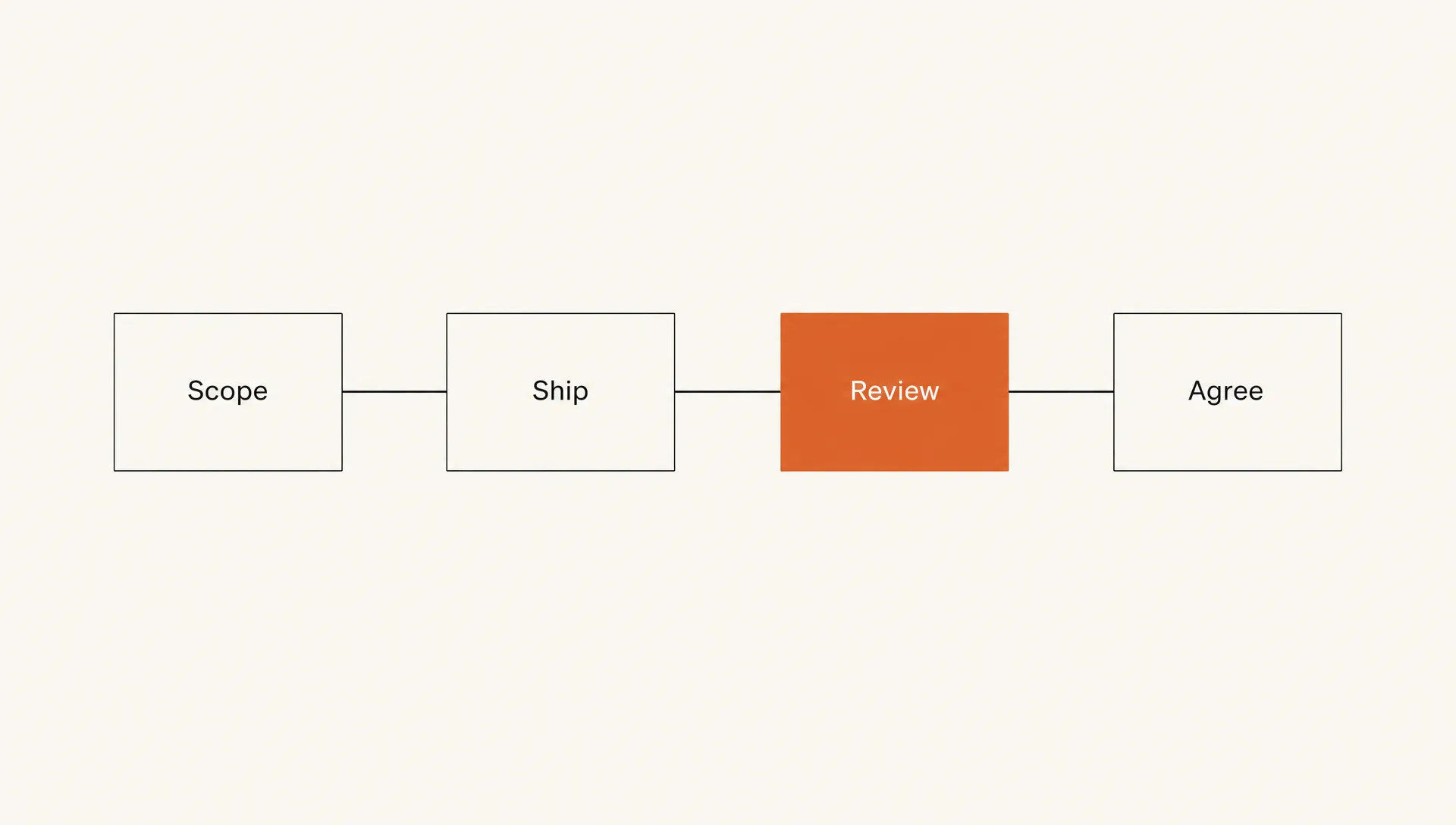
Establish a weekly review around a named deliverable, its definition of done and the acceptance decision. Show work in the product or its operating environment rather than relying only on a progress summary. Record what shipped, what changed and what remains uncertain.
Agree with your technical co-founder on how maintenance enters the roadmap. Customer incidents, dependency updates, backups and security work compete with features for attention. Someone needs authority to surface that work and explain the consequence of postponing it.
Require usage and cost telemetry for new capabilities from their first version. If a workflow calls a model, sends messages or processes customer files, agree on what gets measured and who reviews the cost. That gives you evidence for pricing and spending decisions.
Discuss the first engineering hire before recruiting becomes urgent. What would trigger the hire? Who selects the person, reviews their work and owns their onboarding? Which responsibilities would move, and which would stay with the founders?
A co-founder should know whether they are committing to remain close to delivery, manage future engineers or develop into a different role. You do not need to predict every stage, but you do need to compare expectations.
Check whether you need a partner or engineering ownership
Before signing, revisit the problem you are solving. You may need another owner who shares company decisions and long-term risk. You may instead need someone accountable for a codebase while you retain company direction.
Agentic engineering changes the delivery options available to an early-stage SaaS. One accountable engineer can direct coding, test, security and documentation agents, review their output and own release decisions. The founder approves priorities, spending and customer commitments at agreed gates.
That arrangement still needs engineering judgment, acceptance criteria and company ownership of the resulting work. Agents producing more code does not remove the need for a person who can explain and stand behind what ships.
Compare that model with a first engineer or a defined contractor engagement before treating founder equity as the only way forward. The comparison should include accountability, continuity, cash requirements and the work you would still have to manage.
Choose a technical co-founder when you want that person as a long-term owner of the company, including during a change of direction or a difficult period. Delivery capacity alone is an incomplete reason to create that relationship.
Write down the unresolved points before signing
Bring a short founder memo to counsel. It should state the agreed roles, proposed equity basis, vesting intentions, decision rights, intellectual property arrangements and departure process. Attach the cap table and any existing agreements that affect those decisions.
Mark unresolved points plainly. “We will work it out” is not an agreement about who controls a release or what happens when someone stops contributing. If a question could materially change either person’s decision to join, settle it before issuing equity.
Ask each person to explain the arrangement back in their own words. A useful test is whether you describe the same authority, obligations and departure consequences without reading from the memo.
Your technical co-founder should understand the downside as clearly as the opportunity. So should you. The purpose of this work is to expose disagreements while both people can still choose freely.
Frequently asked questions
How much equity should a technical co-founder get? There is no universal percentage. Consider future responsibility, existing contributions, shared risk, compensation and the company’s current ownership. Agree on the cap table basis and vesting terms alongside the split.
Does the CEO title override a co-founder’s ownership rights? The title alone does not settle that. Officer authority, board authority, shareholder rights and any special approval rights come from the applicable law and company documents. Have counsel explain how those rights interact.
Can we agree on equity after working together? You can use a bounded trial before committing to a founder relationship. Document compensation, confidentiality, ownership of trial work and any equity arrangement before the work begins. Do not rely on an informal promise to resolve ownership later.
What if one founder has already built the product? Document the existing contribution and verify that the company has the necessary ownership and usage rights. Then discuss the responsibilities ahead, including maintenance and rebuilding where necessary. Existing code is one input into the agreement.
This week, write the agreement before debating the split
Create a shared document with your proposed roles, decision rights, equity assumptions, vesting intentions and departure terms. Gather the cap table, code assignments and account ownership records. Choose one bounded deliverable you can complete together, with written acceptance criteria.
If you already have a proposed partner, compare your answers before negotiating the percentage. If you do not, use the document to decide whether you need another company owner, a first engineer or accountable engineering delivery.
At Archer Scaling AI, I help early-stage SaaS become AI-native. I build and run the systems that develop, market and sell the SaaS so the founder’s time goes to the decisions. If you want to discuss what technical ownership could look like in your company, book a free intro call.