What an MVP for early-stage SaaS needs before accepting payments
Building an MVP for startup validation? Learn what your SaaS needs before charging: reliable billing, data protection, ownership and a tested paid workflow.

You have a v1 that works in a demo, and someone is ready to pay. An MVP for startup validation can stay narrow, but accepting payments means you need a complete path from purchase to useful work, plus someone responsible when that path breaks.
The decision is which customer promise you can deliver, support and learn from without spending your runway on features nobody has asked for.
Define the paid product before adding features
A minimum viable product is the smallest usable version of a product that lets you test an important assumption with real users. For an early-stage SaaS, that assumption might be whether a specific customer will pay to get a recurring job done.
A prototype can show how the product might work. A proof of concept can establish whether a technical approach is possible. A paid MVP has to deliver the result you sold, even if parts of the work behind it remain manual.
Before developing more software, separate demand uncertainty from delivery uncertainty. A landing page can test whether people request access. A manually delivered service can test whether the result matters. Neither proves that customers will repeatedly use a self-serve product.
Accepting payment adds obligations to those experiments. You need clear terms, a functioning delivery path and a way to resolve failed access or missing work. A small feature set is compatible with those basics.
An MVP for startup validation needs a written promise
Write a short description of what the first customer is buying before connecting checkout. Include the intended user, the job they can complete, what they receive and what remains outside the release.
For a hypothetical reporting SaaS, that promise could be: upload a supported spreadsheet, generate a report, review it and download the result. Custom integrations, scheduled delivery and shared workspaces could wait.
Make limitations visible before payment. If setup requires your help, say so. If delivery includes a manual review, explain the timing. If only one file format works, show an example before the customer uploads anything.
The same description should establish the charge frequency, cancellation process, support contact and refund terms. Privacy notices, tax treatment and consumer obligations depend on where you operate, who buys and what you process. Resolve the applicable requirements rather than assuming a payment provider handles everything.
This written promise becomes the boundary for development and acceptance. A contractor should be able to read it and explain what must work before the release is ready.
Choose evidence that could change your decision
For an MVP for startup validation, payment is one signal. It does not establish that the product delivers enough value to earn continued use.
Choose a success measure tied to the job. For the reporting example, track whether a customer reaches a usable report, returns for the next relevant reporting cycle and needs less founder intervention over time.
Also write down what would challenge the idea. Customers might pay but never finish setup. They might value your manual interpretation while ignoring the software. They might use the result once without having a recurring need.
Record the evaluation period and your decision rule before launch. Your own threshold should reflect the product’s usage cycle and economics, rather than a borrowed benchmark.
Keep the first paid scope to one complete job
Prioritize the entire customer journey, including the parts that make an unexciting demo: recovering access, understanding an error and leaving the product.
For the hypothetical reporting product, the release boundary could look like this:
| Workflow | Needed for the first paid release | Can wait if the promise allows it |
|---|---|---|
| Getting started | Supported input, clear instructions and working account access | Multiple onboarding paths |
| Completing the job | A report the customer can review and download | Custom report layouts |
| Handling failure | A visible failure state and a safe retry or support route | Automatic recovery from every edge case |
| Managing the purchase | Clear charge terms, cancellation and a refund process | A custom billing portal |
| Leaving | A way to retrieve relevant work and request account deletion | Self-serve migration tools |
An MVP for startup validation should follow that complete journey rather than stop at the easiest screens to demonstrate.
Manual handling is reasonable when the volume is manageable, the customer understands the arrangement and someone owns the task. Record those manual steps so they do not disappear into your inbox or a contractor’s memory.
Make billing and access agree when events go wrong
A successful checkout screen does not prove that billing and product access stay in sync. Payments, subscription changes and notifications can arrive separately. Customers can close their browser before returning to your app.
Where your payment provider supports it, use its hosted checkout or payment components rather than collecting raw card details in your application. That can reduce your exposure to card data, but you still need to understand your responsibilities.
The product should verify payment status through a trusted server-side path. Repeated notifications must not create duplicate access grants or repeat a paid action. Stripe’s webhook documentation describes retries, duplicate events and signature verification for its implementation.
Before accepting real payments, test successful payment, failed payment, cancellation, renewal and refund behavior. Check what happens when the customer pays but never returns to the app, and when a notification arrives again.
For subscriptions, define when access ends after cancellation and what happens after a failed renewal. The interface, terms and backend behavior should agree.
An MVP for startup validation can use a simple billing arrangement. It still needs a reliable connection between what the customer paid for and what the account can do.
Protect the data you accept from the first customer
Start with a plain-language data map: what enters the product, where it goes, who can see it and how long it stays. Include analytics, error logs, support tools and any external model provider that receives customer content.
Collect only what the first paid workflow needs. Avoid copying real customer data into development environments or logs just because it makes debugging easier.
If the product has separate customer accounts, test separation explicitly. Create two test accounts and try to reach one account’s files, reports and settings from the other. A hidden button does not establish an access boundary. The OWASP authorization guidance explains why permissions need enforcement on each relevant request.
Protect administrative accounts, keep secrets out of the repository and document who can access production data. If a contractor still has access, these questions about customer data access help clarify permissions and removal responsibilities.
An MVP for startup validation also needs usable forms and errors. Check keyboard navigation, field labels and whether a customer can understand what went wrong without relying only on color.
Products handling sensitive data or regulated activities can require substantially more preparation. A small release does not remove those obligations.
Keep company control and prove you can recover
The company should control the repository, domain, hosting, database and payment account. Contractors can receive appropriate access without becoming the only route into production.
For a non-engineer founder, this means having a named technical owner who can explain the system and operate it. For a technical founder stretched across the company, it means someone else can handle a release or incident without waiting for you to leave a sales call.
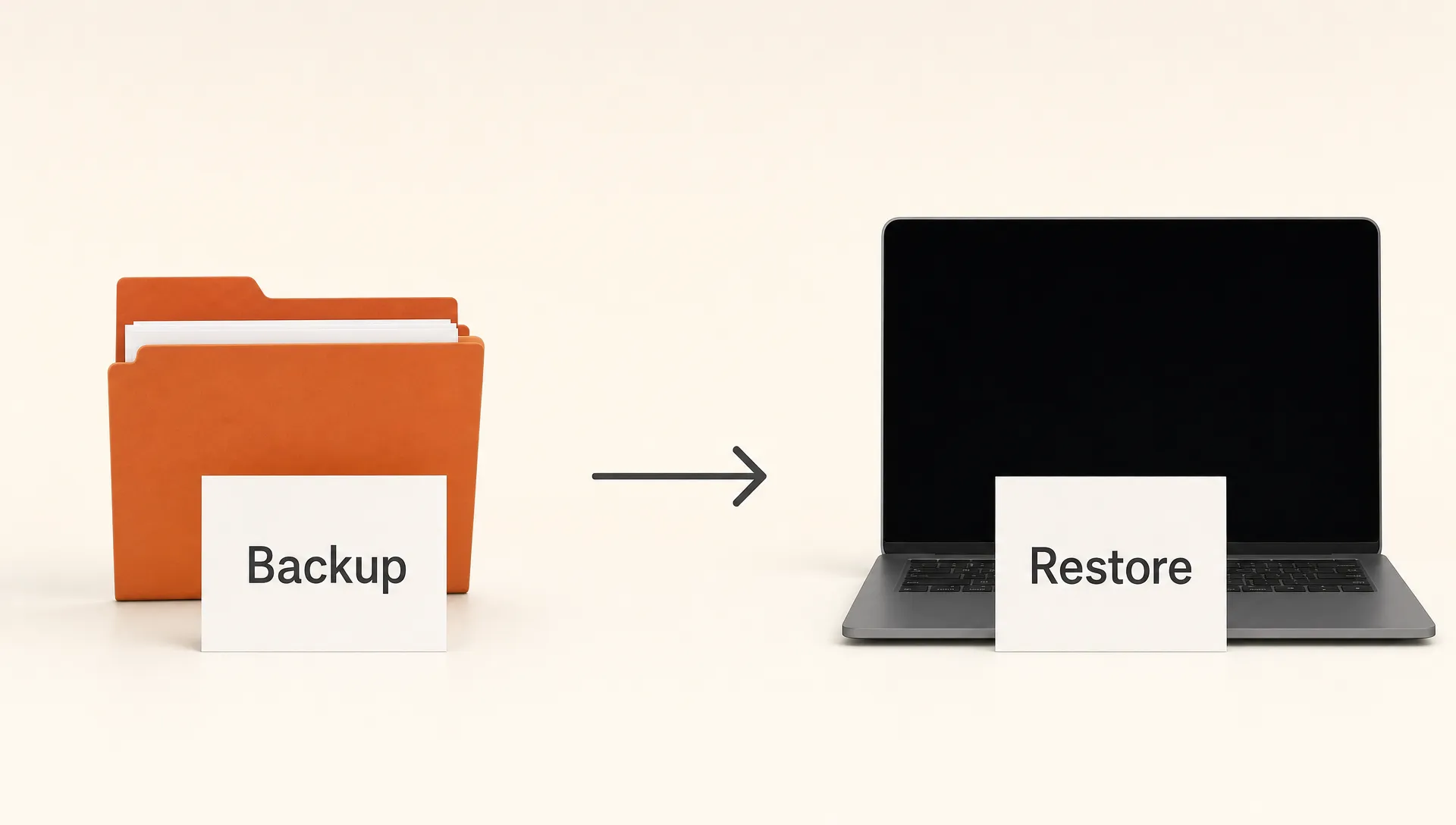
Document how to deploy a change, return to a previous version and restore customer data. Then test those instructions somewhere safe. A backup is useful evidence only when you know what it contains and can restore it.
Decide who receives failure alerts and who tells an affected customer what happened. Keep the support address visible. Define the response you can actually provide instead of promising coverage you cannot staff.
If an outside developer controls critical accounts, settle ownership and exit terms before paid customers depend on that arrangement.
Record what each delivered result costs
A paid release should produce enough usage and cost telemetry to show what serving customers involves. Record completed jobs, failed jobs, retries and the external costs associated with the workflow.
Include the work you do manually. If every report needs founder review, that remains part of delivery even when it does not appear on a hosting invoice.
If the product uses a model to extract information or draft an output, record usage and cost at the customer or job level without unnecessarily storing sensitive prompts or content. Repeated attempts, large inputs and abandoned jobs can create costs without delivering value.
For an MVP for startup validation, the useful question is whether you can explain the cost of a successful customer outcome. That evidence informs pricing, usage limits and which manual step deserves attention next.
You do not need an elaborate reporting system before launch. You need a consistent record that connects usage, delivery failures and cost to the promise being sold.
Agentic engineering still needs one accountable engineer
Coding agents can implement changes, write tests and help document the product. They can also introduce mistakes, misunderstand the payment rules or produce tests that repeat the same mistaken assumption as the code.
Agentic engineering needs a named engineer who decides what ships and reviews the evidence. Coding, test, security and documentation agents do the volume; the engineer owns technical decisions and release readiness.
The founder approves the customer promise, priorities and accepted deliverable. A non-engineer founder should not have to inspect authentication code to decide whether the work is complete. Acceptance should include observable behavior, test evidence and a clear explanation of remaining risks.
Keep each deliverable bounded. “Customers can cancel and retain access until the stated end of their billing period” is something you can verify. “Billing improvements” leaves too much room for interpretation.
Rehearse the paid journey before opening checkout
Run a release rehearsal in a test environment, then verify the production configuration separately. Start with a fresh account and follow the same instructions a customer will receive.
Complete the purchase flow, reach the promised result, encounter an intentional failure and recover. Check cancellation, support contact and data retrieval. Confirm that alerts reach the person who will act on them.
Record evidence against the written promise. That might include a completed test purchase, a permission test, a restored backup and the cost record for a finished job. Keep sensitive information out of screenshots and shared notes.
An MVP for startup validation is ready to charge when the bounded promise works and material risks have been addressed or clearly disclosed. An unresolved issue that could expose another customer’s data, take money incorrectly or lose paid work should block release.
After launch, review behavior alongside customer conversations. Feature requests tell you what someone wants; observed failures show where the current promise breaks. Ship the next accepted deliverable against that evidence rather than expanding the roadmap automatically.
Frequently asked questions
Can I charge before every planned feature is finished? Yes, if the release delivers the stated paid result and its limitations are clear before purchase. Unfinished roadmap items are different from broken payment handling, missing access controls or an inability to deliver paid work.
Can a manually delivered workflow count as an MVP? Yes. Manual work can test whether the outcome matters before you develop more software. Disclose material limits, define delivery timing and record the effort involved so the experiment informs your economics.
Does an MVP for startup validation need enterprise infrastructure? There is no single infrastructure requirement. Match preparation to the data, customer commitments and consequences of failure. Company-controlled accounts, working access boundaries, recoverable data and a named owner are useful starting points, not a complete standard for every product.
Can I accept payments for a product built with an app builder or coding agent? The tool does not establish readiness. Verify the paid workflow, permissions, billing behavior, recovery and operating ownership. If you cannot inspect or control an important part of the product, resolve that limit before depending on it.
This week, write the promise and test one paid journey
Choose one customer type and one job your current release can complete. Write the promise, its exclusions and the evidence that would make you continue, change direction or stop.
Then walk through purchase, delivery, failure and cancellation. Put each gap beside a named owner and a clear acceptance condition. Address the gaps that threaten customer money, data or the promised result before adding another feature.
At Archer Scaling AI, I help early-stage SaaS become AI-native. I build and run the systems that develop, market and sell the SaaS so the founder’s time goes to the decisions.
For a conversation about your company, your current product and what needs ownership before you charge, book a free intro call.