How to find programmers for early-stage SaaS with a small budget
Need to find programmers for startup work? Compare hiring paths, source candidates and run a paid trial while protecting your code and runway.

Your SaaS needs someone to ship the next release, but your budget cannot support an engineering team. Searching “find programmers for startup” turns up plenty of profiles without telling you who can take responsibility for your product. The useful question is who can own the next piece of work without giving you another person to manage every day.
Start with the next accepted deliverable
Before sourcing candidates, write down what someone needs to deliver. “Finish the product” gives a programmer too much room to guess and gives you almost nothing to evaluate.
A useful brief names a user action, its expected result and the boundaries of the work. For example: an invited user can accept an invitation, access the correct account and receive a clear error when the invitation has expired. Include what must remain unchanged.
Describe the starting point honestly. Is there a working product, an app-builder prototype, an abandoned repository or only a specification? Can someone run it locally? Who controls deployment? These details change both the work and the person you need.
Before you find programmers for your startup, assemble a short hiring packet: the brief, a product walkthrough and a description of the current codebase. Keep credentials and customer information out of it.
For a non-engineer founder, this packet replaces vague technical language with observable behavior. For a technical founder, it keeps architectural preferences from swallowing the immediate product decision. Both should be able to say what acceptance looks like before the first candidate conversation.
Choose the responsibility before the hiring model
A contractor, a first employee and a technical cofounder take on different commitments. Choose based on the decisions that need an owner, not just the cash available today.
| Path | Appropriate when | Responsibility to clarify |
|---|---|---|
| Independent contractor | A bounded change has clear acceptance criteria | Who reviews, deploys and maintains the change |
| First engineering employee | There is continuing product work and someone can support the hire | Who sets priorities and handles technical decisions |
| Technical cofounder | You want a partner in company-level decisions and risk | Authority, equity, commitment and how disagreements get resolved |
| Accountable engineer using agents | You need technical ownership with agents doing implementation work under review | Who approves changes and remains responsible after release |
A junior programmer may be capable of implementing a well-defined task while still needing someone else to review design, security and releases. If nobody can provide that support, the hiring plan has a gap.
When you find programmers for your startup, separate coding ability from responsibility for the running product. Ask each candidate which decisions they expect you to make and which they will own.
A cofounder relationship needs a separate evaluation of trust and company direction. Equity creates a lasting ownership relationship, so limited cash alone is a poor reason to offer it. Spend time working together before discussing a permanent arrangement.
Put a boundary around the budget
You do not need an elaborate financial model to start a search. You need to know what you can commit without making the next product decision dependent on another raise or an immediate sale.
Separate the first scoped change from ongoing expenses. Hosting, external services, agent usage, maintenance and incident handling can continue after the original developer finishes. Ask which costs are included, which sit in your accounts and which remain unknown.
To find programmers for your startup on a small budget, reduce the initial scope before reducing the standard of ownership. A narrower workflow with tests and a deployment note gives you something usable. A larger feature with uncertain behavior leaves another bill behind it.
Ask candidates to state their assumptions before comparing proposals. Someone who has inspected the repository is making a different estimate from someone responding to a paragraph in a message.
The method for testing development cost estimates against the same scope helps separate those differences. Compare the work, acceptance conditions and exclusions before comparing the headline totals.
Use focused channels to find programmers for startup work
Start where you can get evidence about how someone works. A warm introduction from a founder who has shipped with a programmer can provide context that a polished profile cannot.
Ask former colleagues, founders in your network and people who maintain products you know. Make the request specific: someone comfortable taking over an existing SaaS codebase, or someone who can turn a scoped workflow into a maintained release. “Know any developers?” produces much weaker introductions.
Founder communities can surface independent engineers who already understand small-company constraints. GitHub can help identify relevant public work, but a contribution history does not establish availability, communication quality or responsibility for production. Use it as a starting point for a conversation.
A freelance marketplace gives you another sourcing channel when your network is thin. Narrow the search around your existing stack and the work required. Screening a small relevant shortlist is more useful than collecting generic proposals.
Remote hiring broadens the search, but location does not settle fit. Agree on how decisions, release updates and urgent problems will be communicated. Local access cannot compensate for missing ownership.
For a genuine company partner, finding a technical cofounder through your existing network requires a different introduction from a contractor search. Keep those conversations separate so candidates understand the commitment you are proposing.
Write an introduction someone can forward
Your outreach should help a suitable programmer recognize the work and an unsuitable one decline it. Avoid a long pitch about the market while leaving the actual engineering need unexplained.
A hypothetical introduction might read:
I run an early-stage SaaS with a working product built by a previous contractor. I need someone to inspect the existing code, then own a bounded invitation workflow through testing and deployment. The repository and hosting are in company accounts. We would start with a paid trial, with broader work depending on mutual fit.
Replace every detail with your actual situation. If the repository is missing or the hosting account belongs to a former contractor, say so. Do not promise clean code you have not verified.
To find programmers for your startup through introductions, make the request easy to forward without asking your contact to explain the company for you.
State whether the opportunity is contract work, employment or a cofounder conversation. A message that blurs all three wastes attention and attracts people with incompatible expectations.
Screen for decisions using work they can explain
A portfolio tells you what someone is willing to show. The interview needs to establish what they personally did, why they did it and what happened after release.
Ask a candidate to walk through a relevant project they are allowed to discuss. Which changes were theirs? What broke? How did they detect the problem? What would another engineer need to continue the work?
Then bring the conversation back to your brief. Ask what they would inspect first, what could change their estimate and what they would deliberately leave out. A useful answer identifies uncertainty without requiring you to understand every implementation detail.
When you find programmers for your startup, look for explanations that connect code decisions to your product and runway. “We need to rewrite everything” needs evidence, alternatives and consequences before it becomes a plan.
A non-engineer founder can assess whether an explanation is specific and consistent, but should not pretend that this replaces code review. Arrange an independent engineer to review the trial if necessary. A technical founder should inspect the actual diff rather than relying only on a demonstration.
Decline requests for an extensive unpaid feature. A short discussion can establish fit; usable development work belongs in a paid, agreed scope.
Verify references and authorship separately
A referral is useful context, not a substitute for checking. Speak with someone who worked directly with the candidate and ask about the relationship as well as the result.
Useful reference questions cover what the programmer owned, how they communicated uncertainty, what happened when a release went wrong and whether another person could take over. Ask whether the referee would work with them again, then ask why.
Verify authorship separately. A screenshot cannot establish who wrote the code. A repository walkthrough, a clearly described contribution or an explanation of a change can provide better evidence. Respect confidentiality: candidates should not expose another company's private repository to impress you.
If you find a programmer for your startup through a trusted friend, keep the same checks. Personal trust can help start the conversation without answering questions about technical ownership.
Missing public work is not automatically a rejection. Private commercial work may be impossible to share. The candidate still needs a credible way to demonstrate reasoning, describe their contribution and provide an appropriate reference or work sample.
Use a paid trial to test a complete handoff
The trial should resemble the work you will actually need. Pick a small change in an isolated environment, with enough context to reveal how the candidate reads unfamiliar code and handles ambiguity.
Agree on the scope, compensation, confidentiality and ownership before access begins. Define acceptance in observable terms. An invitation workflow, for example, might need to handle a valid invitation, an expired invitation and an attempt to access the wrong account.
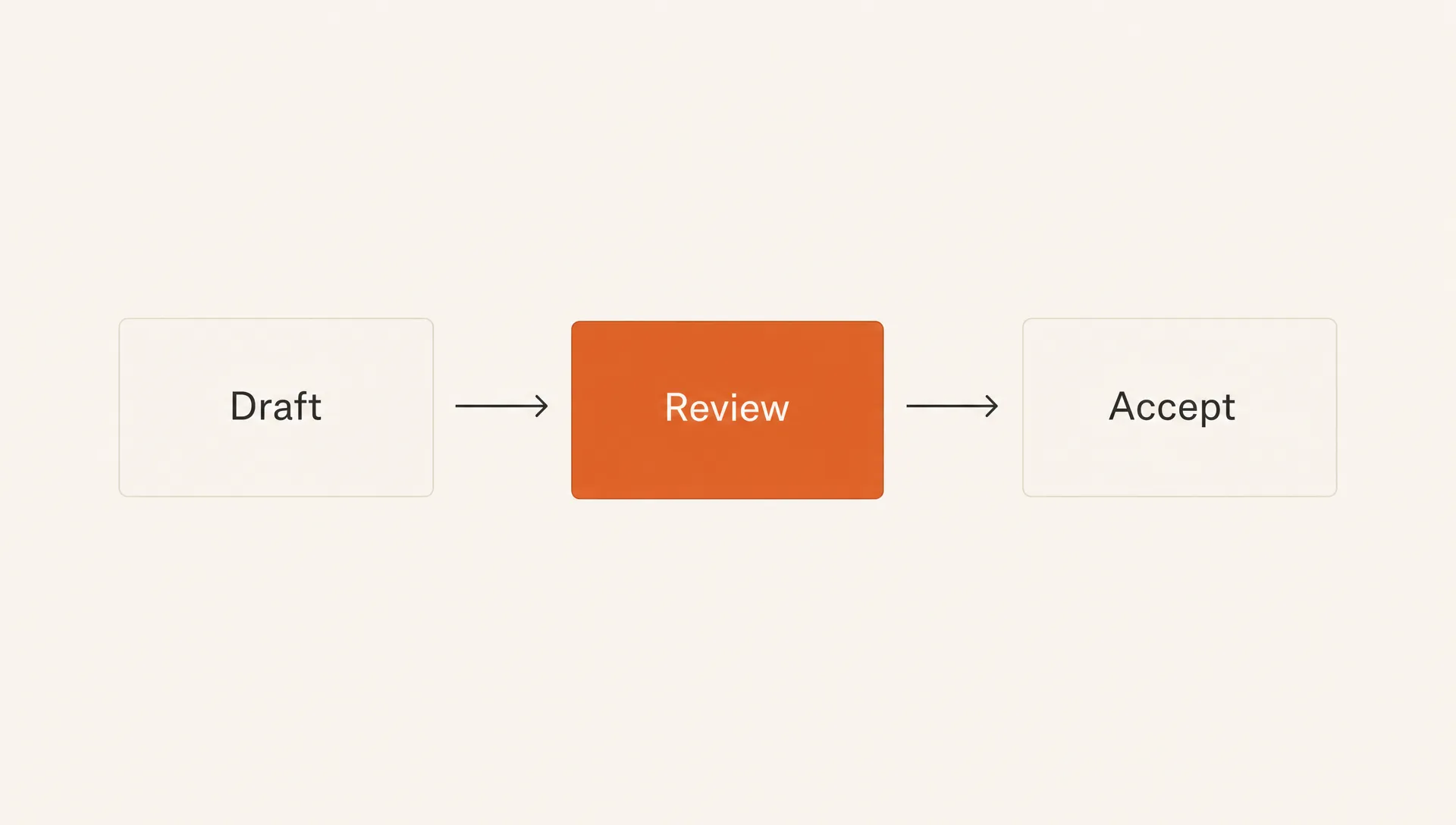
The handoff should contain the code change, relevant tests, a deployment note and known limitations. Ask the candidate to explain what remains uncertain. A clean demonstration without those artifacts is incomplete evidence.
To find programmers for your startup who can own delivery, evaluate what happens between “the code runs” and your acceptance. Do they request clarification early? Can they explain a failed test? Can someone else follow their release instructions?
Syneo's guide to commissioning custom software covers the same useful preparation: a business goal, a testable brief, clear contract terms and an explicit handover.
Keep the trial small enough that a rejection does not strand an essential release. You are buying evidence about working together before making a larger commitment.
Keep accounts and access under company control
Remote work does not require the programmer to own your infrastructure. Create company-controlled accounts for the repository, hosting, domain and services the product depends on. Invite the person with the access needed for the task.
Keep production customer data out of candidate screening and trial environments. Use synthetic or appropriately sanitized data. Start code inspection with read-only access where practical, then increase permissions only when the agreed work requires it.
The agreement should address ownership of commissioned work, confidentiality, third-party dependencies and what happens at the end of the relationship. Have appropriate legal counsel review language that affects intellectual property and equity. Paying an invoice alone should not be your entire ownership plan.
Where you find programmers for startup work matters less if the engagement leaves your company dependent on their personal accounts. Check that repository history, deployment instructions and recovery access stay available to the company.
Keep secrets out of source code and shared messages. When the relationship ends, remove access and rotate credentials the person could retrieve. Ask for a final record of unfinished work so the next engineer can distinguish a known limitation from a new defect.
Ask how agents change the work and who reviews it
Agentic engineering means an accountable engineer directs coding, test, security and documentation agents, reviews their output and decides what is ready to ship. The agents perform work within a process that still needs technical judgment.
This can make a different engagement possible from hiring several people for separate implementation tasks. It also introduces questions about generated changes, service costs and review quality. More code produced does not establish that the product is safer or more useful.
If you want to find programmers for your startup who use agents, ask to see the review process. Who checks an access-control change? Which tests must pass? How are credentials kept away from inappropriate tools? What gets recorded when agent usage costs rise?
Ask for usage and cost telemetry from the first version of any agent-based feature. You need to see the cost of serving real workflows before relying on assumptions in your pricing.
“Agents do the work. You make the decisions.” That division still requires a named engineer accountable for the changes they approve. A founder should approve product scope and acceptance without becoming the person responsible for checking every generated line.
Avoid judging candidates by how many agents they run. Judge the accepted deliverable, the evidence behind it and the condition of the codebase afterward.
Agree on continuing responsibility before expanding
A successful trial supports another commitment; it does not settle every question about the relationship. Before expanding, agree on who owns priorities, technical decisions, deployment, incidents and documentation.
For a contractor, put the next deliverable and maintenance expectations in writing. For an employee, define the role beyond the immediate backlog and confirm that the company can support the commitment. For a cofounder, discuss decision rights, vesting, departure and intellectual property with appropriate legal advice.
As you find programmers for your startup, watch for work that depends on undocumented personal knowledge. Ask how another engineer would reproduce the environment, ship a change and recover from a failed release.
A good working arrangement leaves a visible record: accepted changes, open risks, deployment notes and costs in your accounts. Review those artifacts before increasing scope.
You do not need to promise the entire roadmap to secure a useful first engagement. Agree on the next commitment both sides can understand, then reassess using the evidence from actual work.
Frequently asked questions
Can I hire a programmer before I have a technical cofounder? Yes. A bounded contractor engagement can move a defined workflow forward. You still need someone accountable for reviewing changes and deciding whether they are safe to release. Agree on that responsibility explicitly.
How much should I budget for the first developer? A reliable figure depends on the codebase, scope, ownership and ongoing responsibilities. Define the first accepted deliverable, disclose the starting condition and ask for assumptions and exclusions. An estimate made without inspecting existing code carries unresolved uncertainty.
Can agents replace the first engineering hire? Agents can perform implementation, testing and documentation tasks. Someone still needs to direct them, review changes and handle failures. Whether you need an employee depends on the continuing work and who can carry that accountability.
What if my v1 came from an app builder? Check what you own and can export, where the data lives and which changes the platform permits. A programmer should inspect those constraints before proposing an extension or replacement. A new build should follow evidence about the limitation.
This week, prepare one decision you can actually make
Write a brief for the next user workflow, confirm who controls the repository and hosting, then set the boundary for a paid trial. Send that packet to a few relevant contacts. These steps help whether you find programmers for your startup now, choose a cofounder later or postpone hiring.
If you already have candidates, give each the same starting information. Compare their questions, assumptions and proposed handoff before choosing who proceeds.
Archer Scaling AI helps early-stage SaaS become AI-native. It builds and runs the systems that develop, market and sell the SaaS so the founder's time goes to the decisions. The AI-native assessment begins with read-only discovery across the company and codebase. The development retainer follows with one accepted deliverable each week, in the founder's own repos and accounts.
For a conversation about your company, your current product and who should own the next release, book a free intro call.