How an AI-native early-stage SaaS keeps its operating costs visible
See how an AI native startup tracks operating costs, controls agent spending and measures cost per accepted result without a finance team.

You have a SaaS product to ship and agents consuming paid services across development, marketing and sales. Calling the company an “ai native startup” tells you little about what a completed task costs, what failed attempts cost or who will stop an expensive run.
Define the work before you measure the spend
For an early-stage SaaS, becoming AI-native means designing work around agents that execute bounded tasks, with a person accountable for the result. The founder keeps the decisions about priorities, spending and what is acceptable to ship.
That changes what you need to measure. A subscription invoice shows what a vendor charged. It rarely tells you whether the spending produced a working feature, a rejected draft or a loop that kept retrying.
Adding a coding assistant to an otherwise unchanged process can leave costs buried in individual accounts. When agents execute more of the work, usage records need to travel with that work from the start.
You need two views: the total cash the company spends and the cost of completing a useful unit of work. Neither view replaces the other. A cheap individual task can still create an expensive monthly bill when it runs unnecessarily.
Give the “ai native startup” label a cost record
Start with a small cost register in an account the company owns. A spreadsheet is enough initially. Each paid service needs a named owner, a billing basis and a reason it exists.
Separate commitments from usage so a quiet week does not hide the bills that will still arrive.
| Cost category | What belongs here | What the founder should be able to see |
|---|---|---|
| Recurring commitments | Hosting plans, software seats and recurring contractor commitments | What remains payable without new work |
| Product usage | Model calls, database activity, storage and paid integrations | What changes as customers use the product |
| Development work | Coding-agent runs, test environments and build services | What it costs to deliver and maintain changes |
| Marketing and sales work | Research runs, content generation, enrichment and sending services | What each completed workflow consumes |
Keep engineering and operating-service commitments visible too. Agents do not remove the cost of someone owning the codebase, reviewing changes and responding when something breaks.
Record included usage and credits separately. A credit can reduce the current bill while concealing what the same workload will cost after it expires.
Measure accepted results, including failed attempts
For an AI-native startup developing a SaaS, the useful unit is usually closer to an accepted result than a model call.
For a product feature, that might be a customer task completed successfully. For development, it might be a change that passes its agreed checks and receives acceptance. For content, it might be a draft approved for publication rather than every draft generated.
Use a simple calculation:
Cost per accepted result = attributable run costs divided by accepted results.
The numerator should include failed attempts, retries and paid fallback calls associated with that work. Counting only the successful final call makes the workflow look cheaper than it was.
Define the reporting window and acceptance rule. Otherwise, spending this week on work accepted next week can distort the comparison. If no results were accepted, report the spending and the lack of accepted results directly.
Keep shared overhead separate unless you explicitly allocate it. A database plan serving the whole product should not silently become the cost of whichever feature you happened to inspect.
This gives you evidence for pricing and scope decisions without pretending that every expense can be attributed perfectly.
Give one technical owner responsibility for the record
The founder should not have to reconstruct usage from several vendor consoles.
In agentic engineering, one accountable engineer owns the product while coding, test, security and documentation agents do the volume. That owner should also be responsible for making the cost of those runs inspectable.
For an AI-native startup with a small team, a minimal run record can capture the workflow, job identifier, provider, model or service, usage, estimated cost and outcome. It should also show whether the run retried or required review. Mark estimates clearly until they are reconciled with billing.
Keep provider accounts, billing access and the records in company-controlled environments. If a contractor leaves, the cost history should remain available alongside the code.
The founder approves spending boundaries and consequential actions. The technical owner implements and checks those controls. The distinction follows the broader question of which decisions an AI-native SaaS founder should keep.
Agents do the work. You make the decisions.
Stop expensive runs before the invoice arrives
An alert is useful only if someone receives it and knows what to do. It may not stop spending.
For example, OpenAI’s project budget guidance describes monthly project budgets as soft thresholds. Requests can continue after the threshold is crossed. Check each provider’s behavior rather than assuming a setting called “budget” is a hard cap.
An AI-native startup needs controls around the workflow itself. Set limits on attempts, execution time, simultaneous jobs and the amount of input a task can consume. Put a spending check before another paid action, with enough headroom for requests already running and costs reported late.
Name the stopping behavior. A development agent might pause with its work saved for review. A customer-facing feature may need to return a clear failure state. Neither should silently retry forever.
Fallbacks need a policy too. Moving a failed task to a more expensive model can be reasonable, but record that choice and bound its use. Otherwise, a reliability change can quietly alter the economics of the feature.
Test the cost controls on one bounded task
Before giving an agent a broad research assignment, test whether it can finish a narrow one within its limits.
For a hypothetical test, give it one public page, such as Ant Farms Calgary’s catalog of ant farm kits and supplies, and ask it to extract the product categories and shipping regions stated there. The output can be checked against the page without specialist knowledge.
Inspect the run record. Did it fetch the same page repeatedly? Did it expand into unrelated research? Did a failed extraction trigger another paid model call? Did it stop when its limits were reached?
Use a controlled failure in your own test environment to check the stop behavior as well. A successful run alone cannot show whether the retry limit works.
The useful evidence is a completed task, its recorded consumption and a demonstrated stopping condition. Repeat that test after changing the model, prompt or workflow.
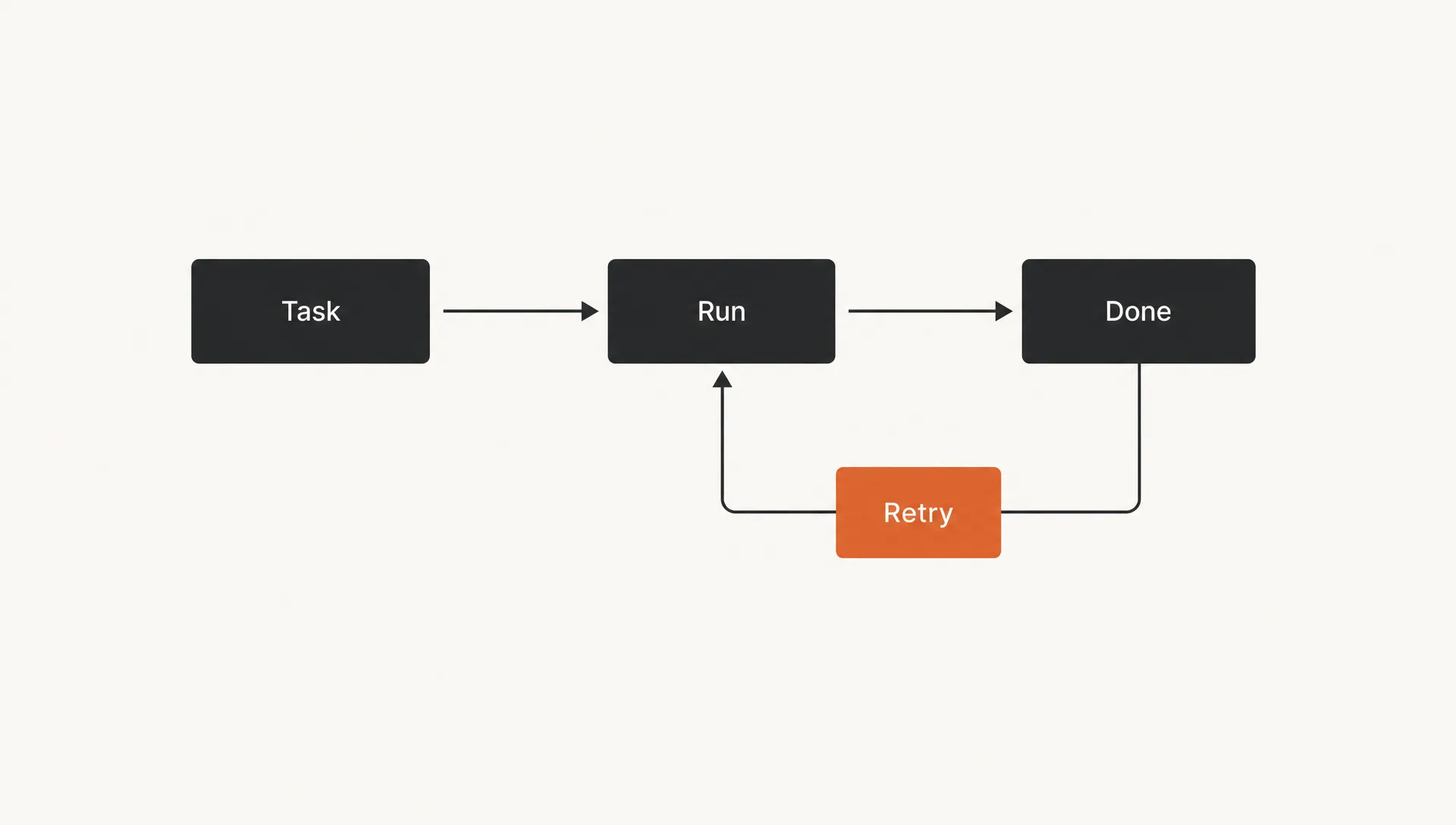
Keep cash spending separate from founder review time
A workflow can have a low provider bill and still consume the founder’s week.
Track review effort alongside cash cost without combining them into a misleading total. Record whether the founder accepted the output immediately, requested changes or had to finish it manually. A lightweight time estimate can help, provided it is labeled as an estimate.
For an AI-native startup, this exposes a cost that invoices miss: agents may generate work faster than the founder can approve it.
Marketing and sales workflows need the same discipline. A research run that produces more material than anyone can review creates a backlog, even if each run is inexpensive. A content workflow should account for discarded drafts and revisions, not just published output.
Compare workflows using the same acceptance standard. Cutting review while allowing weaker work through is a different decision from reducing the effort needed to produce acceptable work.
When review becomes the constraint, narrow the task or improve its acceptance checks before increasing output.
Reconcile usage with bills and explain the gaps
Usage telemetry is an operating estimate. The provider invoice is the billing record. Keep both.
Compare recorded usage with provider totals regularly, then reconcile against invoices when they arrive. Differences can come from reporting delays, discounts, credits, storage charges, taxes or work that was never tagged.
Maintain an explicit “unallocated” category. That is more honest than forcing every unexplained charge into a customer or feature. Investigate whether it comes from a forgotten environment, a shared credential or missing instrumentation.
An AI-native startup also needs a forward view: recurring commitments, expected usage and known changes that could move spending. Keep the assumptions visible so the founder can distinguish a forecast from cash already spent.
Data handling belongs in this review. Cost records usually need identifiers and usage metadata, not complete customer documents or prompts. Restrict access and retain only what is needed for investigation and accounting. Sending sensitive inputs to another logging service creates another place to manage permissions, retention and deletion.
Use the weekly review to change a decision
The weekly cost record should answer three questions: what did we accept, what did it consume and what needs to change?
Consider a hypothetical customer workflow that processes an uploaded document. Its recorded costs include extraction, model calls, storage and retries. The founder accepts an improvement because it meets the written definition of done, but the record shows that difficult documents require repeated attempts.
That evidence could support several decisions: narrow the supported input, add an approval gate for unusual jobs, change the implementation or revisit the feature’s pricing. The record does not choose for you.
The same review can reveal a development environment left running or a research job that keeps repeating an unchanged task. Those deserve different responses from genuine growth in customer usage.
For an AI-native startup shipping one accepted deliverable a week, attach a short cost note to that deliverable. State what changed, what new recurring usage it creates and whether the estimate has been checked against actual runs.
Frequently asked questions
What makes a SaaS AI-native rather than simply using AI tools? The company organizes meaningful work around agents that execute bounded tasks, with accountable ownership, acceptance checks and founder decision gates. Using a chatbot or coding assistant alone does not establish those operating arrangements.
Does an AI-native startup need a separate finance platform? An early-stage SaaS can start with provider billing, basic run records and a shared cost register. Add another platform when reconciling accounts or allocating usage becomes difficult enough to justify its cost and maintenance.
Should every model call be assigned to a customer? Assign customer-facing usage where practical. Keep development, internal operations and genuinely shared costs distinct. Preserve an unallocated category for gaps rather than presenting estimates as exact attribution.
Can a spending limit guarantee the final bill? That depends on where the limit is enforced. Provider alerts may not block requests, and application controls must account for concurrent work and delayed usage reporting. Test the behavior and keep billing access available to the company.
Make one workflow’s costs visible this week
Choose a workflow that already runs in your company. Write down its acceptance rule, identify every paid service it touches and name the person responsible for its limits.
Trace one accepted result and one failed attempt. Check whether you can explain the spending, see the retries and stop further execution. Put any missing ownership or instrumentation on the roadmap as a named deliverable with a written definition of done.
That is a useful starting point whether you keep the work yourself, bring in a contractor or hire your first engineer.
Archer Scaling AI helps early-stage SaaS become AI-native. It builds and runs the systems that develop, market and sell the SaaS so the founder’s time goes to the decisions.
Book a free intro call to talk about your company, who owns the technical work today and where operating costs are hardest to see.