What SaaS app development services should include after launch
Compare SaaS app development services after launch: technical ownership, weekly delivery, security, recovery and costs your company can inspect.

Your SaaS is live, but the contractor has moved on or the next release still depends on you checking every detail. You’re comparing SaaS app development services because someone needs to own what happens after launch: broken signups, rising infrastructure costs, customer requests and changes that could break what already works.
The scope should make that ownership visible, with named responsibilities, evidence you can inspect and a way to keep shipping without turning you into the delivery manager.
Put one person in charge of the running product
A launch handoff can leave you with source code and nobody responsible for the product. Post-launch work needs a named technical owner who knows the codebase, reviews changes and follows problems through to resolution.
That person should be able to explain what changed, what remains risky and what needs your decision. You should not have to coordinate separate contractors whenever a problem crosses the application, database and hosting account.
Ask for concrete records rather than a promise to “handle maintenance.”
| Responsibility | Evidence you should be able to inspect |
|---|---|
| Release ownership | A record of changes, checks and approvals |
| Production health | Alerts routed to a named owner |
| Recovery | A written recovery procedure and restore-test record |
| Product maintenance | Known defects and dependency updates in the backlog |
| Technical decisions | Short explanations of consequential choices |
| Handoff | Current setup instructions and company-controlled access |
For a non-engineer founder, those records provide visibility without requiring you to read the code. For a technical founder stretched across other responsibilities, they let you review consequential decisions without reviewing every change yourself.
SaaS app development services should specify who keeps these records current, including when nothing new is being released.
Keep the code, accounts and recovery path under your control
Your company should control its repositories, hosting, database, domain, billing integrations and any model-provider accounts the product uses. A contractor can have delegated access without being the only person who can recover an account or deploy a release.
Separate environments matter here. Testing a change should not require experimenting on customer data in production. Deployment credentials should have limited permissions, and removing a departing contractor should not disable the application.
Backups need an owner, a retention policy and a tested recovery procedure. A successful backup notification does not establish that someone can restore the product. Ask what was restored, where it was restored and what data or service interruptions recovery would involve.
The handoff should also explain dependencies outside the codebase: scheduled jobs, email delivery, file storage and third-party integrations. Otherwise, owning the repository can still leave you dependent on knowledge held by someone else.
When reviewing SaaS app development services, ask whether another engineer could take over using the accounts and documentation you already own.
Define what happens when a real user gets stuck
A running server does not prove that a customer can finish the task they came to do. Post-launch checks should follow the product’s important workflows, such as creating an account, completing a purchase, saving work or retrieving an export.
Agree on which failures require immediate attention and which belong in the normal delivery queue. A complete outage, a data exposure and a cosmetic defect need different handling. The agreement should state who receives alerts, what response coverage exists and how you hear about an incident.
Do not assume that ongoing development includes continuous incident response. Those responsibilities need explicit scope, including what happens outside the agreed coverage.
Security maintenance belongs in that scope too. Account permissions, dependency updates and checks that one customer cannot access another customer’s data need ongoing attention. OWASP’s Application Security Verification Standard provides a published reference for agreeing which security checks apply to your product.
Ask for evidence of the checks and a record of known gaps. A blanket statement that the application is secure gives you little to act on.
SaaS app development services should turn a production problem into a tracked fix, a verification step and, where appropriate, a check that catches the same failure next time.
Accept one named deliverable each week
An open-ended maintenance agreement can absorb attention without showing what changed. A named weekly deliverable gives the work a boundary and gives you something specific to accept.
The deliverable might be a corrected signup flow, a tested database recovery procedure or cost tracking for a resource-heavy feature. It does not have to be a new feature to be worth shipping.
Define done before work starts. For a signup fix, that could mean a new user can register, verify their email and reach the intended screen, with an automated check covering the failure that prompted the work.
Your acceptance should focus on the intended behavior and any trade-offs you agreed to. The technical owner remains responsible for code review, testing and release safety. You should not become the substitute quality reviewer because nobody else owns it.
Keep urgent production work visible alongside planned delivery. If an incident displaces the week’s deliverable, record what changed and why rather than quietly letting both drift.
This cadence also exposes technical debt. Repeatedly spending the week repairing the same area is evidence for a roadmap decision, not a reason to hide maintenance inside vague progress updates.
SaaS app development services should expose operating costs
Hosting totals alone rarely explain what it costs to serve a customer. You need usage and cost telemetry that connects meaningful product activity to the resources it consumes.
For a file-processing product, that might mean storage, processing time and failed jobs. For a feature that calls a model, track model usage, retries and the cost of failed attempts as well as successful requests. Begin with the workflows most likely to affect your pricing or runway.
Use stable internal identifiers to connect activity with an account or workflow without copying sensitive customer content into logs. Agree on retention and access, since telemetry itself needs boundaries.
The useful artifact is a repeatable way to answer a business question: which activity is driving cost, and what happens if customers use more of it?
Set alerts and limits where unexpected usage could create a problem. A retry loop or an unrestricted expensive action deserves a decision before it becomes a billing surprise. If telemetry was missing from v1, add it as an explicit deliverable rather than postponing it behind every new feature request.
Put agentic engineering behind a human release gate
Agentic engineering can assign coding, test, security and documentation work to agents while one accountable engineer reviews the output and owns the release. That arrangement still needs a clear approval path.
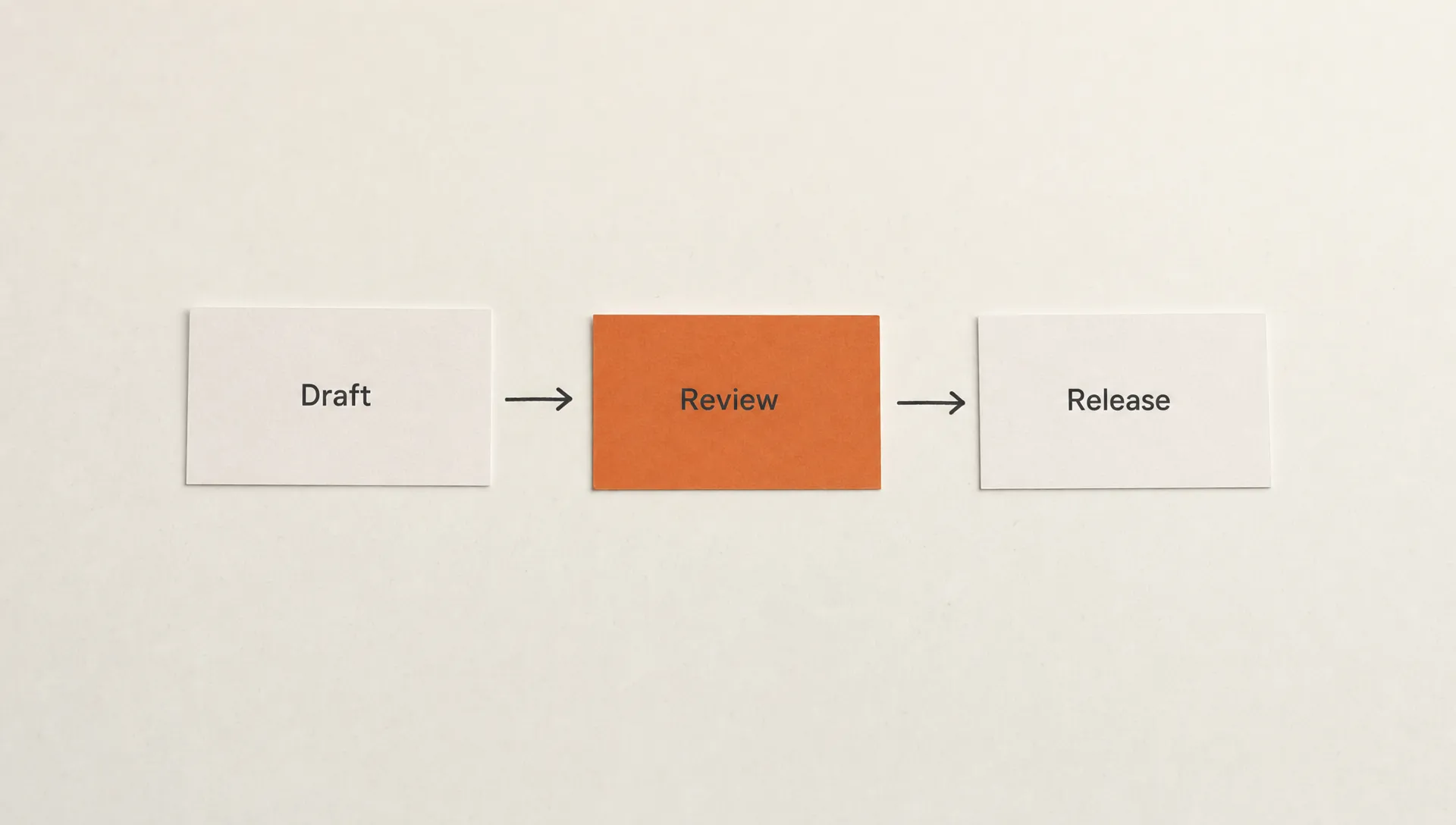
A coding agent can prepare a patch. Test agents can exercise it, security agents can flag issues and documentation agents can update the relevant instructions. Those outputs can contain mistakes, so the engineer needs to inspect the change and decide whether the evidence is sufficient to release it.
Production credentials and destructive actions should remain behind explicit permissions. A generated patch should not gain unrestricted access to customer data simply because it passed an automated check.
Your role is to approve priorities, decide product trade-offs and accept the result. The engineer owns technical review within those agreed boundaries. “Agents do the work. You make the decisions.” requires a working review process, not just access to a coding tool.
When SaaS app development services use agents, ask who catches incorrect assumptions and who is accountable when a generated change reaches production.
Include the workflows around the product in the ownership map
The systems that develop, market and sell the SaaS share dependencies. A signup change can affect onboarding emails. A new plan can affect billing, lifecycle messages and the promises made on a landing page.
Your development provider does not automatically own all of those workflows. The agreement should name the boundary and the handoff, particularly where a product change affects another system.
For example, changing account creation might require checking the welcome email and the event that marks signup as complete. Someone needs to verify that the whole path still works, rather than declaring success because the application deployed.
Keep founder approval gates where judgment matters, such as customer-facing claims, outbound messages and changes to product behavior. Agents can prepare the work inside the systems, while responsibility for review remains explicit.
Compare proposals by the responsibility they actually cover
Two proposals can both say “ongoing support” and cover very different work. One may fix reported defects. Another may also own releases, monitor important workflows and maintain recovery procedures.
Compare SaaS app development services against the same responsibility map before comparing the commercial terms. Ask each provider to explain how a recent production failure would move from detection to verification, using your product’s actual workflow as the example.
For an inherited codebase, expect discovery before a confident delivery commitment. Unknown dependencies, missing tests and inaccessible accounts can change what needs attention first. A proposal that acknowledges those unknowns gives you a clearer basis for deciding than one that assumes them away.
Keep the first-hire decision separate. If the product needs daily collaboration across many changing requirements, hiring an engineer may fit better. If the immediate need is accountable ownership and a bounded weekly delivery queue, an external arrangement may be workable. Watch how much coordination still falls back to you.
Frequently asked questions
Does post-launch maintenance include new features? Only if the agreement includes them. Separate defect correction, security maintenance, incident response and roadmap delivery so you can see what receives attention when priorities compete.
What should I ask for when taking over an existing application? Ask for company-controlled accounts, deployment instructions, known defects, recovery procedures and a record of recent changes. SaaS app development services should explain any missing access or documentation before committing to a delivery plan.
Can a coding agent maintain the product by itself? It can perform assigned tasks, but it can also misunderstand requirements or produce incorrect changes. A named engineer should own technical review, release permissions and follow-through when something fails.
What changes if I plan to raise funding? Keep ownership records, access controls, technical decisions and known risks current. Those artifacts can support diligence, but they do not establish that the product has passed an independent security review.
Map next week’s ownership before adding more work
This week, write down who owns releases, production failures, recovery, security maintenance and usage costs. Beside each responsibility, name the evidence you can inspect. Leave gaps visible rather than filling them with “the contractor handles it.”
Then choose one deliverable for the coming week and write its acceptance criteria before work begins. If nobody can confidently deploy or recover the product, address that gap before expanding the roadmap.
At Archer Scaling AI, I help early-stage SaaS become AI-native by building and running the systems that develop, market and sell the SaaS, so the founder’s time goes to the decisions.
For a conversation about your company and who owns the product after launch, book a free intro call.