How Sales B2B Teams Can Stop Losing Warm Leads
Stop losing warm leads with a practical B2B sales follow-up system for faster routing, cleaner CRM hygiene, and margin-safe automation.
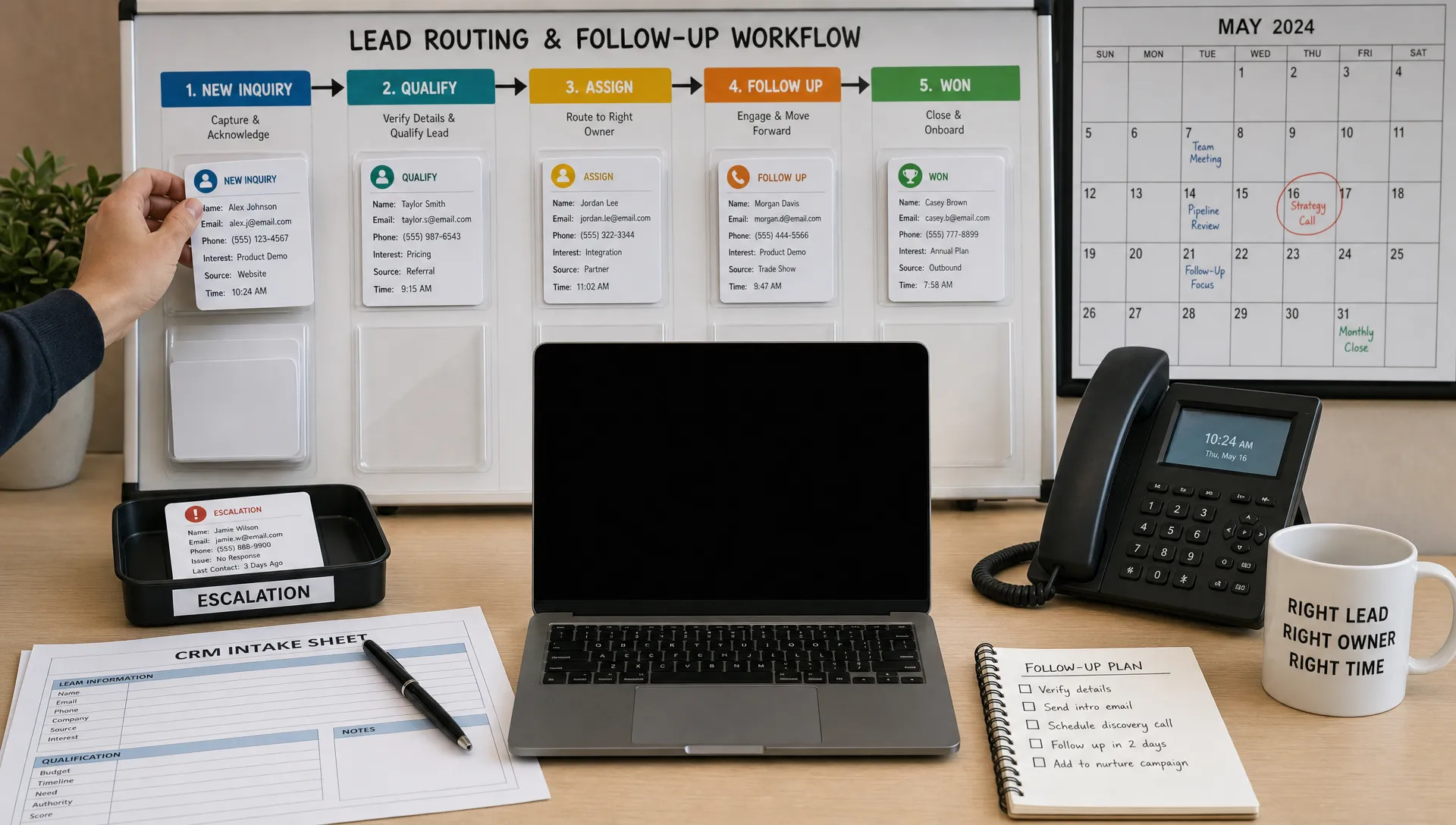
A warm lead is not a safe lead. It is a lead with momentum, and momentum decays quickly when nobody owns the next step.
For B2B sales teams, especially inside marketing agencies, the problem is rarely a total lack of interest. The bigger leak is operational: a prospect fills out a form, replies to a campaign, asks for pricing, gets referred by a partner, or attends a webinar, then waits while your team figures out who should respond, what context matters, and whether the opportunity is worth prioritizing.
That delay is expensive. A widely cited Harvard Business Review study on online sales leads found that companies contacting prospects within one hour were nearly seven times more likely to qualify the lead than companies that waited longer. Speed matters, but speed alone is not the whole fix. If your follow-up is fast but generic, your CRM is messy, or your team has no escalation path, warm leads still slip away.
The goal is not to pressure reps to “try harder.” The goal is to build a system where warm leads are captured, routed, researched, followed up, and tracked before attention fades.
Why warm leads go cold
Warm leads usually go cold in the gaps between marketing activity and sales action. A prospect may have real intent, but your internal process forces them to wait, repeat themselves, or interpret vague next steps.
This happens most often when the team relies on memory, Slack messages, scattered forms, or manual CRM updates. Everyone assumes someone else has followed up. A lead owner is assigned, but not notified. A discovery call happens, but the proposal task is never created. A prospect asks a specific question, but the rep replies with a canned sequence because context was missing.
In B2B sales, trust is built through relevance and consistency. A warm lead is often comparing multiple vendors, solving an urgent business problem, or testing whether your team is organized enough to handle their account. Slow, inconsistent follow-up sends the opposite signal.
For agencies, the stakes are even higher. The same people responsible for selling may also be managing delivery, reviewing campaigns, leading strategy calls, or building proposals. Without a repeatable system, lead follow-up competes with client work, and client work usually wins.
Define “warm lead” before you automate anything
Many teams lose warm leads because they never agreed on what “warm” means. A newsletter click, a pricing-page visit, a referral introduction, and a direct demo request should not receive the same treatment.
Before building more automation, define the lead signals that deserve sales attention. This prevents two common problems: reps wasting time on low-intent activity and high-intent prospects waiting behind weak leads.
| Lead signal | What it usually means | Best next action |
|---|---|---|
| Referral introduction | Trust already exists through a third party | Personal reply from a senior owner or assigned rep |
| Contact form with business context | Prospect is actively looking for help | Fast response with a relevant next step |
| Pricing or service page visit from target account | Commercial curiosity, possibly buying research | Account review and personalized outreach |
| Webinar or event question | Problem awareness and topic-level interest | Follow-up tied to the exact question asked |
| Re-engaged closed-lost opportunity | Timing may have changed | Short, contextual reactivation message |
| Content download only | Interest, but not necessarily intent | Nurture unless paired with stronger buying signals |
This definition should be visible inside your CRM and operating docs. If the rule lives only in a sales leader’s head, it will not scale.
A practical rule: a warm lead should have both a signal and a reason. “Downloaded an ebook” is a signal. “Downloaded an ebook, visited the pricing page twice, and works at an ICP-fit company” is a reason to prioritize.
Build a warm lead operating system
Stopping lead leakage requires a simple operating system. Not a bloated sales stack. Not five more dashboards. Just a clear path from interest to action.
A good warm lead system answers five questions every time:
- Who owns this lead right now?
- Why is this lead considered warm?
- What should happen next?
- By when should it happen?
- What happens if it does not happen?
If any of those answers are unclear, the lead is at risk.
Capture intent at the source
The system starts where the lead enters. Forms, landing pages, referral notes, chat widgets, ad campaigns, webinars, and inbound emails should capture enough context for sales to act intelligently.
That does not mean adding twenty fields to every form. It means collecting the few details that change the follow-up. For an agency, those details might include company type, current challenge, budget range if appropriate, timeline, service interest, and source campaign.
The more important part is preserving context. If a prospect came from a specific case study, ad campaign, partner page, or problem-focused article, that context should be visible to the rep. “Saw your reporting automation article” creates a better opening than “Thanks for reaching out.”
This is one reason agencies should think of lead follow-up as an operations problem, not just a sales problem. Archer Scaling AI has written separately about why agency marketing systems protect your margin, and warm lead handling is one of the clearest examples: the system reduces wasted effort while improving response quality.
Route leads by ownership and capacity
Lead routing often breaks because it is designed around ideal conditions. The founder gets strategic accounts. The sales lead gets inbound demos. Account managers handle expansion. Then someone is on a client call, traveling, sick, or buried in delivery, and the lead sits.
A better system routes by both fit and availability. The CRM should assign the lead, notify the owner, create the next task, and escalate if the task is not completed inside the agreed SLA.
For example, a high-intent inbound lead from a target account might require a 15-minute response SLA during business hours. A content-qualified lead might enter a slower nurture path. A referral from a major client might notify both the assigned seller and the founder.
The key is that routing should not end at assignment. Assignment without task creation and escalation is just a label.
Respond with relevance, not just speed
Fast follow-up wins attention. Relevant follow-up wins the conversation.
A strong first response should acknowledge the context, reduce friction, and make the next step obvious. If the lead asked about reporting, do not send a generic agency overview. If the lead came through a referral, mention the referrer and why the introduction makes sense. If the lead requested pricing, do not hide behind a vague “let’s connect” message without offering a path to qualification.
For B2B teams, the best first response often includes three elements: the reason for the reply, one useful observation, and one clear next step. That is enough to feel personal without slowing the team down.
Use AI to prepare the seller, not replace the seller
AI is useful when it removes preparation work and preserves context. It is risky when it creates generic outreach at scale without human judgment.
In a warm lead workflow, AI can summarize the company, identify likely pain points from the form response, pull relevant CRM history, draft a first reply, suggest discovery questions, and create call prep notes. The seller still decides what matters and sends the message.
This distinction matters. Warm leads already know something about you. If your response feels automated in the wrong way, you can damage trust. The right AI ops layer makes the human follow-up sharper, faster, and more consistent.
If your team is unsure where automation should start, lead routing and follow-up are usually better first moves than flashy content generation. The same principle is covered in more detail in what a marketing agency should automate first.
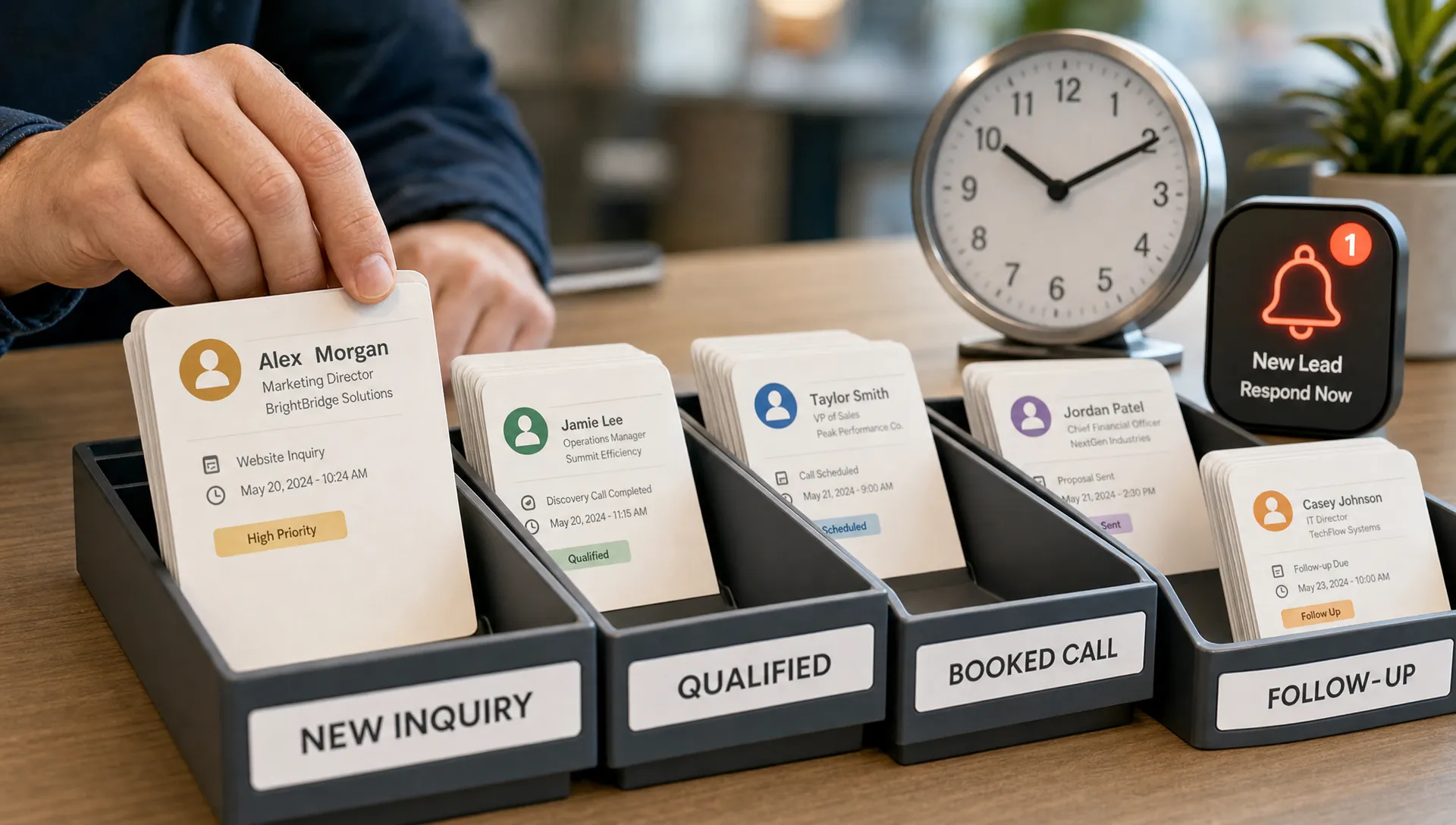
What to automate without making sales robotic
The best sales automation is almost invisible to the prospect. It makes your team more prepared, more timely, and more consistent, while keeping the conversation human.
Here is where automation can help most:
| Workflow | What automation can do | What the human should own |
|---|---|---|
| Lead capture | Push form, source, and campaign data into the CRM | Decide whether the lead is worth direct outreach |
| Lead enrichment | Add company size, industry, website, and public context | Interpret whether the account is a fit |
| Routing | Assign owner based on rules and availability | Override when a strategic relationship matters |
| First response | Draft a contextual reply and create the task | Edit, personalize, and send |
| Follow-up | Schedule reminders and sequence steps | Adjust tone based on the conversation |
| No-show recovery | Trigger a same-day reschedule prompt | Decide when to disengage |
| Proposal handoff | Create internal tasks and collect missing inputs | Shape the commercial strategy |
| Reactivation | Surface old opportunities showing renewed intent | Reopen the conversation thoughtfully |
This prevents the common trap of automating only outbound volume. More messages do not fix a broken warm lead process. In many cases, they create more noise.
Automation should first protect the leads you already earned. Those leads are usually cheaper to convert than cold accounts, and they are more likely to become profitable clients if the handoff is clean.
Fix the leaks that happen after the first reply
Many teams think they are losing leads because the first response is too slow. Sometimes that is true. But plenty of warm leads are lost after the first reply, in the messy middle between “interested” and “closed.”
The discovery call has no next-step discipline
A good discovery call should end with a confirmed next step. That might be a proposal date, a technical follow-up, a stakeholder introduction, or a decision timeline.
If the call ends with “we’ll follow up soon,” the lead enters a danger zone. The CRM should require a next action before the opportunity can move stages. No next action means no real pipeline.
Proposals take too long to assemble
In agencies, proposals often get delayed because the team needs inputs from strategy, media, creative, analytics, or leadership. Each delay lowers the prospect’s confidence.
The solution is not always a fully automated proposal. It is usually a standardized proposal intake workflow. After discovery, the system should collect required details, create internal tasks, notify contributors, and track the proposal deadline.
If paid media is part of your agency’s offer, capacity can also become a hidden sales bottleneck. Some agencies solve this by pairing their internal sales process with on-demand white-label PPC execution, so a strong pipeline does not stall because delivery resources are stretched.
CRM stages describe hope instead of reality
Pipeline stages should reflect buyer progress, not seller optimism. “Proposal sent” is real. “Interested” is vague. “Verbal yes” is risky unless a contract or payment step is scheduled.
Warm leads get lost when CRM stages allow ambiguity. Tight stage definitions make forecasting cleaner and force the team to confront stalled deals earlier.
A simple stage definition might include entry criteria, required fields, required next action, and exit criteria. If those rules feel too heavy, start with one requirement: every open opportunity must have a future-dated next step.
The metrics that show whether warm leads are leaking
You cannot fix what you only discuss anecdotally. B2B sales teams need a small set of operational metrics that show where warm leads are slowing down or disappearing.
| Metric | Why it matters | Healthy behavior it encourages |
|---|---|---|
| Speed to first meaningful response | Measures how quickly interest receives attention | Fast ownership and fewer forgotten leads |
| Lead-to-meeting conversion rate | Shows whether follow-up creates action | Better qualification and clearer CTAs |
| Meeting show rate | Reveals friction between booking and attendance | Stronger reminders and better expectation setting |
| Discovery-to-proposal rate | Shows whether calls are producing real opportunities | Better call structure and qualification |
| Proposal turnaround time | Measures internal delivery of sales assets | Faster handoffs and cleaner proposal ops |
| Follow-up completion rate | Shows whether reps execute agreed next steps | Accountability without micromanagement |
| Stale opportunity count | Identifies deals with no future action | Cleaner pipeline and earlier reactivation |
Review these weekly, not quarterly. Warm lead leakage compounds quickly, so the feedback loop must be short.
Do not overcomplicate the reporting. A simple weekly view of new warm leads, response time, meetings booked, opportunities created, proposals sent, and stale deals is enough to reveal the bottleneck.
Create an SLA between marketing, sales, and delivery
A service-level agreement sounds corporate, but the concept is simple: everyone agrees what happens when a warm lead appears.
For an agency, that agreement should include marketing, sales, and delivery. Marketing defines the source and intent. Sales owns the conversation. Delivery confirms feasibility, scope, and turnaround when needed.
Your SLA might define:
- Which lead signals trigger sales outreach
- How quickly different lead types must receive a response
- Who owns each type of lead
- When leadership should be notified
- What CRM fields are required
- How proposal requests move to delivery contributors
- When stale opportunities are recycled or closed
The point is not bureaucracy. The point is removing interpretation from moments that require speed.
If the SLA is too complex, it will be ignored. Start with the few rules that protect the highest-value opportunities, then expand once the team trusts the system.
Make follow-up easier to do than to avoid
Most follow-up problems are design problems. If the rep has to search the CRM, read through Slack, open three docs, write from scratch, and remember the SLA, the system is asking for failure.
The better approach is to make the next action obvious. When a warm lead arrives, the rep should see the source, context, suggested priority, recommended next step, relevant history, and due time in one place.
This is where AI ops can quietly improve sales performance. Not by replacing the seller, but by removing the operational drag around the seller. A rep who starts with a clean brief and a prepared next step can spend more energy on judgment, timing, and conversation quality.
The best systems also protect managers. Instead of asking, “Did anyone follow up with that lead?” managers can see which leads are unowned, which tasks are overdue, and which opportunities have gone stale.
That changes the sales culture. Follow-up becomes part of the operating rhythm, not a heroic act from the most organized person on the team.
Frequently Asked Questions
What counts as a warm lead in B2B sales? A warm lead is a prospect showing meaningful buying intent or relationship-based trust. Examples include referral introductions, demo requests, pricing-page visits from target accounts, event questions, and re-engaged closed-lost opportunities. The best definition combines behavior, fit, and context.
How fast should a B2B sales team follow up with warm leads? High-intent inbound leads should usually receive a meaningful response as quickly as possible during business hours, often within minutes. Lower-intent leads can move through a slower nurture path, but they should still have clear ownership and next steps.
Can AI automate warm lead follow-up completely? AI can automate preparation, routing, reminders, enrichment, summaries, and draft responses. The final judgment should stay with a human, especially for high-value B2B deals where context, trust, and timing matter.
Why do agencies lose warm leads even when demand is strong? Agencies often lose warm leads because sales, delivery, and leadership responsibilities overlap. Without clear routing, proposal workflows, CRM hygiene, and escalation rules, good opportunities get delayed behind client work.
What is the easiest first automation for stopping lead leakage? Start with lead capture, routing, and overdue follow-up alerts. These are simple, high-impact automations because they make sure every warm lead has an owner, a due time, and a next action.
Stop letting warm leads depend on memory
Warm leads should not rely on whoever happens to check the inbox first. They need an operating system that captures intent, assigns ownership, prepares the seller, tracks the next step, and escalates when momentum is at risk.
If your B2B marketing agency is generating interest but losing margin to slow handoffs, messy CRM work, or inconsistent follow-up, Archer Scaling AI can help install and run the AI ops layer behind that process. The starting point is a paid Margin Teardown with a roadmap and three automation moves, or it is on me.
You can see the actual system running live before you commit at Archer Scaling AI.